
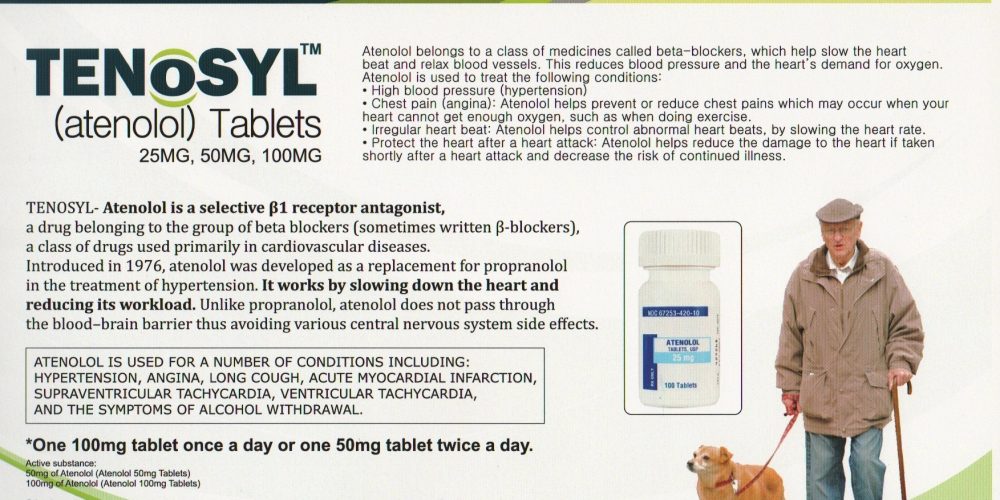
Product Overview
What Atenolol tablets are and what they are used for
Atenolol belongs to a group of medicines called beta-blockers. It is used to:
• control high blood pressure.
• relieve chest pain (angina pectoris).
• control irregular heart beat.
• protect the heart in the early treatment after a heart attack.
Before you take
Do not take Atenolol tablets and tell your doctor if you:
• are allergic (hypersensitivite) to atenolol or any of the other ingredients in Atenolol tablets.
• have second or third degree heart block.
• have shock caused by heart problems.
• have heart failure which is not under control.
• suffer with heart conduction or rhythm problems
• have a slow heart rate
• have low blood pressure.
• suffer from severe blood circulation problems (which may cause your fingers and toes to tingle or turn pale or blue)
• suffer from an increased acidity of the blood (metabolic acidosis)
• suffer from untreated phaeochromocytoma (high blood pressure due to a tumour near the kidney).
• have or have had breathing problems such as asthma, difficulty breathing due to narrowing of the airways or reversible obstructive airways disease. Do not take this medicine if you have a history of wheezing or asthma. Consult your doctor or pharmacist first.
Take special care with Atenolol tablets and tell your doctor if you:
• have a history of allergic reactions
• have heart problems such as heart failure, untreated congestive heart failure, ischaemic heart disease, poor heart function (poor cardiac reserve) or first degree heart block.
• suffer from blood circulation problems (which may cause your fingers and toes to tingle or turn pale or blue) or cramping pain causing limping (intermittent claudication).
• suffer with diabetes mellitus (low blood sugar levels may be hidden by this medicine)
• have impaired liver or kidney function.
• are elderly.
• suffer from a tight, painful feeling in the chest in periods of rest (Prinzmetal’s angina)
have or have had psoriasis.
• suffer from treated phaeochromocytoma (high blood pressure due to a tumour near the kidney).
have high levels of thyroid hormone in the body (thyrotoxicosis).
Taking other medicines
Please tell your doctor or pharmacist if you are taking or have recently taken any other medicines, including medicines obtained without a prescription. Especially:
• clonidine (to treat high blood pressure)
• disopyramide, quinidine and amiodarone (to treat irregular heartbeat (arrhythmia)
• medicines to treat diabetes including insulin
• Non-Steroidal Anti-Inflammatory Drug (NSAIDs) e.g. indometacin
• digitalis glycosides such as digoxin (to treat heart conditions)
• nifedipine, diltiazem, verapamil, prazosin, alfuzosin and terazosin (to treat high blood pressure)
• sympathicomimetic agents (decongestant, asthma or heart medicine)
• isoprenaline or dobutamine (widens blood vessels)
• tricyclic antidepressants e.g. amitriptyline
• barbiturates e.g. phenobarbital (used for insomnia, epilepsy or as an anaesthetic)
• phenothiazines e.g. chlorpromazine (for mental illness).
Pregnancy and breast-feeding
If you are pregnant or planning to become pregnant, speak to your doctor before taking this medicine.
Breast-feeding is not recommended whilst taking Atenolol tablets.
Alcohol intake
You are advised to avoid alcohol whilst taking this medicine.
Driving and using machines
Atenolol tablets may cause dizziness or tiredness. Make sure you are not affected before driving or operating machinery.
Anaesthetics and surgery
If you are going to have an operation or an anaesthetic, please tell your doctor or dentist that you are taking Atenolol tablets as your heart beat might slow down too much and there may be an increased risk of developing low blood pressure.
How to take
Always take Atenolol tablets exactly as your doctor has told you. If you are not sure, check with your doctor or pharmacist.
Take the tablets with water
Doses:
Adults and children over 12 years
High blood pressure: 50-100mg a day as a single dose.
Angina: 100mg once a day or 50mg twice a day.
Irregular heart beat: initial treatment will usually be by injection, followed by a maintenance dose by mouth of 50-100mg a day as a single dose.
After a heart attack: initial treatment will usually be by injection, if no response followed by 50mg by mouth 15 minutes after the injection. A further 50mg 12 hours later and then 100mg 12 hours later. 100mg to be taken once a day thereafter.
Elderly
Your doctor may prescribe you a lower dose if you are elderly, especially if you have impaired kidney function.
Children under 12 years
Not recommended.
Patients with kidney failure
Your doctor may prescribe you a lower dose if you have kidney failure.
Mild to moderate kidney failure – 50mg a day or 100mg once every two days
Moderate to severe kidney failure – 50mg once every two days or 100mg once every four days
Patients on haemodialysis should be given 50mg after each dialysis.
If you take more than you should
If you have accidentally taken more than the prescribed dose, contact your nearest casualty department or tell your doctor or pharmacist at once. Symptoms of an overdose include a slow or irregular heart beat, low blood pressure, difficulty breathing due to fluid on the lungs, acute impaired heart function and shock, fainting.
If you forget to take the tablets
If you forget to take a dose, take it as soon as you remember, unless it is nearly time for your next dose. Then go on as before. Never double up on the next dose to make up for the one missed.
If you stop taking the tablets
Do not stop treatment early, especially if you have ischaemic heart disease. Talk to your doctor before you stop taking the tablets and follow their advice.
Possible side effects
Like all medicines, Atenolol tablets can cause side effects, although not everybody gets them.
Contact your doctor at once if you have the following:
• an allergic reaction such as itching, difficulty breathing or swelling of the face, lips, throat or tongue.
• altered numbers and types of your blood cells. If you notice increased bruising, nosebleeds, sore throats or infections, you should tell your doctor who may want to give you a blood test.
• breathing difficulties caused by narrowing of the airways in patients who have asthma or have had breathing problems.
• heart attack or shock.
Tell your doctor if you notice any of the following side effects, they get worse or you notice any not listed:
Common (less than 1 in 10 users): slow heart beat, feeling sick, cold hands and feet, diarrhoea, tiredness, aching and tired muscles, GI disturbances such as stomach pains, heartburn and constipation.
Uncommon (less than 1 in 100 users): increased levels of liver enzymes, sleep disturbances such as difficulty sleeping
Rare (less than 1 in 1000 users): disturbances in thinking (depression, mood swings, hallucinations, paranoia – psychoses), confusion, reduced sexual potency in men (impotence), nightmares, headaches, dizziness, ‘pins and needles’ or tingling in the hands or feet, dry eyes, impaired vision, heart conduction problems (slowed AV-conduction or increase of existing AV-block causing dizziness, fainting or tiredness), heart failure deterioration, Raynauds phenomenon (condition causing pain, numbness, coldness and blueness of the fingers), liver disorders, disorder of the skin especially a rash, hair loss (alopecia), worsening of psoriasis or skin reactions similar to psoriasis, insomnia, worsening of existing cramping pains causing limping (intermittent claudication), dry mouth, low blood pressure on standing
Very Rare (less than 1 in 10,000 users): an increase in anti nuclear antibodies
Unknown (can not be estimated from available data): depression, hands and feet which may be blue, being sick, pale or red irregular raised patches with sever itching (hives)
Other: symptoms of an overactive thyroid (increased heart rate and appetite, sweating, tremor, anxiety, weight loss and heat intolerance) or low blood sugar (muscle weakness, reduced movements, mental confusion and sweating) may be hidden by Atenolol tablets
How to store
Keep out of the reach and sight of children.
Do not store above 25°C.
Store in the original package.
Keep container in the outer carton.
Do not use after the expiry date stated on the label/carton/ bottle. The expiry date refers to the last day of that month.
Ask your pharmacist how to dispose of medicines no longer required.
- Name of the medicinal product
Atenolol Tablets USP 25mg Taj Pharma
Atenolol Tablets USP 50mg Taj Pharma
Atenolol Tablets USP 100mg Taj Pharma
- Qualitative and quantitative composition
a) Each film-coated tablet contains:
Atenolol USP 25mg
Excipients q.s.
b) Each film-coated tablet contains:
Atenolol USP 50mg
Excipients q.s.
c) Each film-coated tablet contains:
Atenolol USP 100mg
Excipients q.s.
For the full list of excipients, see section 6.1.
- Pharmaceutical form
Film-coated tablet.
White, round, biconvex, film-coated tablets.
- Clinical particulars
4.1 Therapeutic indications
Tenormin is indicated in the treatment of:
- Management of hypertension.
- Management of angina pectoris.
- Management of cardiac arrhythmias.
- Management of myocardial infarction. Early intervention in the acute phase.
4.2 Posology and method of administration
Posology
The dose must always be adjusted to individual requirements of the patients, with the lowest possible starting dosage. The following are guidelines:
Adults
Hypertension
One tablet daily. Most patients respond to 100 mg daily given orally as a single dose. Some patients, however, will respond to 50 mg given as a single daily dose. The effect will be fully established after one to two weeks. A further reduction in blood pressure may be achieved by combining Tenormin with other antihypertensive agents. For example, co-administration of Tenormin with a diuretic, as in Tenoretic provides a highly effective and convenient antihypertensive therapy.
Angina
Most patients with angina pectoris will respond to 100 mg given orally once daily or 50 mg given twice daily. It is unlikely that additional benefit will be gained by increasing the dose.
Cardiac arrhythmias
A suitable initial dose of Tenormin is 2.5 mg (5 ml) injected intravenously over a 2.5 minute period (i.e. 1 mg/minute). (See also prescribing information for Tenormin Injection.) This may be repeated at 5 minute intervals, until a response is observed up to a maximum dosage of 10 mg. If Tenormin is given by infusion, 0.15 mg/kg bodyweight may be administered over a 20 minute period. If required, the injection or infusion may be repeated every 12 hours. Having controlled the arrhythmias with intravenous Tenormin, a suitable oral maintenance dosage is 50–100 mg daily, given as a single dose.
Myocardial infarction
For patients suitable for treatment with intravenous beta-blockade and presenting within 12 hours of the onset of chest pain, Tenormin 5–10 mg should be given by slow intravenous injection (1 mg/minute) followed by Tenormin 50 mg orally about 15 minutes later, provided no untoward effects have occurred from the intravenous dose. This should be followed by a further 50 mg orally 12 hours after the intravenous dose, and then 12 hours later by 100 mg orally, once daily. If bradycardia and/or hypotension requiring treatment, or any other untoward effects occur, Tenormin should be discontinued.
Elderly
Dosage requirements may be reduced, especially in patients with impaired renal function.
Paediatric population
There is no paediatric experience with Tenormin and for this reason it is not recommended for use in children.
Renal impairment
Since Tenormin is excreted via the kidneys, the dosage should be adjusted in cases of severe impairment of renal function.
No significant accumulation of Tenormin occurs in patients who have a creatinine clearance greater than 35 ml/min/1.73 m2 (normal range is 100–150 ml/min/1.73 m2).
For patients with a creatinine clearance of 15–35 ml/min/1.73 m2 (equivalent to serum creatinine of 300–600 micromol/litre), the oral dose should be 50 mg daily and the intravenous dose should be 10 mg once every two days.
For patients with a creatinine clearance of less than 15 ml/min/1.73 m2 (equivalent to serum creatinine of greater than 600 micromol/litre), the oral dose should be 25 mg daily or 50 mg on alternate days and the intravenous dose should be 10 mg once every four days.
Patients on haemodialysis should be given 50 mg orally after each dialysis; this should be done under hospital supervision as marked falls in blood pressure can occur.
Method of administration
For administration by the oral route.
4.3 Contraindications
Tenormin, as with other beta-blockers, should not be used in patients with any of the following:
- hypersensitivity to the active substance, or to any of the excipients listed in section 6.1
- cardiogenic shock
- uncontrolled heart failure
- sick sinus syndrome
- second-or third-degree heart block
- untreated phaeochromocytoma
- metabolic acidosis
- bradycardia (<45 bpm)
- hypotension
- severe peripheral arterial circulatory disturbances.
4.4 Special warnings and precautions for use
Tenormin as with other beta-blockers:
- Should not be withdrawn abruptly. The dosage should be withdrawn gradually over a period of 7–14 days, to facilitate a reduction in beta-blocker dosage. Patients should be followed during withdrawal, especially those with ischaemic heart disease.
- When a patient is scheduled for surgery, and a decision is made to discontinue beta-blocker therapy, this should be done at least 24 hours prior to the procedure. The risk-benefit assessment of stopping beta-blockade should be made for each patient. If treatment is continued, an anaesthetic with little negative inotropic activity should be selected to minimise the risk of myocardial depression. The patient may be protected against vagal reactions by intravenous administration of atropine.
- Although contraindicated in uncontrolled heart failure (see section 4.3), may be used in patients whose signs of heart failure have been controlled. Caution must be exercised in patients whose cardiac reserve is poor.
- May increase the number and duration of angina attacks in patients with Prinzmetal’s angina due to unopposed alpha-receptor mediated coronary artery vasoconstriction. Tenormin is a beta1-selective beta-blocker; consequently, its use may be considered although utmost caution must be exercised.
- Although contraindicated in severe peripheral arterial circulatory disturbances (see section 4.3), may also aggravate less severe peripheral arterial circulatory disturbances.
- Due to its negative effect on conduction time, caution must be exercised if it is given to patients with first-degree heart block.
- May mask the symptoms of hypoglycaemia, in particular, tachycardia.
- May mask the signs of thyrotoxicosis.
- Will reduce heart rate as a result of its pharmacological action. In the rare instances when a treated patient develops symptoms which may be attributable to a slow heart rate and the pulse rate drops to less than 50–55 bpm at rest, the dose should be reduced.
- May cause a more severe reaction to a variety of allergens when given to patients with a history of anaphylactic reaction to such allergens. Such patients may be unresponsive to the usual doses of adrenaline (epinephrine) used to treat the allergic reactions.
- May cause a hypersensitivity reaction including angioedema and urticaria.
- Should be used with caution in the elderly, starting with a lesser dose (see Section 4.2).
Since Tenormin is excreted via the kidneys, dosage should be reduced in patients with a creatinine clearance of below 35 ml/min/1.73 m2.
Although cardioselective (beta1) beta-blockers may have less effect on lung function than non-selective beta-blockers, as with all beta-blockers, these should be avoided in patients with reversible obstructive airways disease, unless there are compelling clinical reasons for their use. Where such reasons exist, Tenormin may be used with caution. Occasionally, some increase in airways resistance may occur in asthmatic patients however, and this may usually be reversed by commonly used dosage of bronchodilators such as salbutamol or isoprenaline. The label and patient information leaflet for this product state the following warning: “If you have ever had asthma or wheezing, you should not take this medicine unless you have discussed these symptoms with the prescribing doctor”.
As with other beta-blockers, in patients with a phaeochromocytoma, an alpha-blocker should be given concomitantly.
4.5 Interaction with other medicinal products and other forms of interaction
Combined use of beta-blockers and calcium channel blockers with negative inotropic effects, e.g. verapamil and diltiazem, can lead to an exaggeration of these effects particularly in patients with impaired ventricular function and/or sinoatrial or atrioventricular conduction abnormalities. This may result in severe hypotension, bradycardia and cardiac failure. Neither the beta-blocker nor the calcium channel blocker should be administered intravenously within 48 hours of discontinuing the other.
Concomitant therapy with dihydropyridines, e.g. nifedipine, may increase the risk of hypotension, and cardiac failure may occur in patients with latent cardiac insufficiency.
Digitalis glycosides, in association with beta-blockers, may increase atrioventricular conduction time.
Beta-blockers may exacerbate the rebound hypertension which can follow the withdrawal of clonidine. If the two drugs are co-administered, the beta-blocker should be withdrawn several days before discontinuing clonidine. If replacing clonidine by beta-blocker therapy, the introduction of beta-blockers should be delayed for several days after clonidine administration has stopped. (See also prescribing information for clonidine.)
Class I anti-arrhythmic drugs (e.g. disopyramide) and amiodarone may have a potentiating effect on atrial-conduction time and induce negative inotropic effect.
Concomitant use of sympathomimetic agents, e.g. adrenaline (epinephrine), may counteract the effect of beta-blockers.
Concomitant use with insulin and oral antidiabetic drugs may lead to the intensification of the blood sugar lowering effects of these drugs. Symptoms of hypoglycaemia, particularly tachycardia, may be masked (see section 4.4).
Concomitant use of prostaglandin synthetase-inhibiting drugs, e.g. ibuprofen and indometacin, may decrease the hypotensive effects of beta-blockers.
Caution must be exercised when using anaesthetic agents with Tenormin. The anaesthetist should be informed and the choice of anaesthetic should be an agent with as little negative inotropic activity as possible. Use of beta-blockers with anaesthetic drugs may result in attenuation of the reflex tachycardia and increase the risk of hypotension. Anaesthetic agents causing myocardial depression are best avoided.
4.6 Fertility, pregnancy and lactation
Caution should be exercised when Tenormin is administered during pregnancy or to a woman who is breast-feeding.
Pregnancy
Tenormin crosses the placental barrier and appears in the cord blood. No studies have been performed on the use of Tenormin in the first trimester and the possibility of foetal injury cannot be excluded. Tenormin has been used under close supervision for the treatment of hypertension in the third trimester. Administration of Tenormin to pregnant women in the management of mild to moderate hypertension has been associated with intra-uterine growth retardation.
The use of Tenormin in women who are, or may become, pregnant requires that the anticipated benefit be weighed against the possible risks, particularly in the first and second trimesters, since beta-blockers, in general, have been associated with a decrease in placental perfusion which may result in intra-uterine deaths, immature and premature deliveries.
Breast-feeding
There is significant accumulation of Tenormin in breast milk.
Neonates born to mothers who are receiving Tenormin at parturition or breast-feeding may be at risk of hypoglycaemia and bradycardia.
4.7 Effects on ability to drive and use machines
Tenormin has no or negligible influence on the ability to drive and use machines. However, it should be taken into account that occasionally dizziness or fatigue may occur.
4.8 Undesirable effects
Tenormin is well tolerated. In clinical studies, the undesired events reported are usually attributable to the pharmacological actions of atenolol.
The following undesired events, listed by body system, have been reported with the following frequencies: very common (≥1/10), common (≥1/100 to <1/10), uncommon (≥1/1,000 to <1/100), rare (≥1/10,000 to <1/1,000), very rare (<1/10,000) including isolated reports, not known (cannot be estimated from the available data).
| System Organ Class | Frequency | Undesirable Effect |
| Blood and lymphatic system disorders | Rare | Purpura, thrombocytopenia |
| Psychiatric disorders | Uncommon | Sleep disturbances of the type noted with other beta-blockers |
| Rare | Mood changes, nightmares, confusion, psychoses and hallucinations | |
| Nervous system disorders | Rare | Dizziness, headache, paraesthesia |
| Eye disorders | Rare | Dry eyes, visual disturbances |
| Cardiac disorders | Common | Bradycardia |
| Rare | Heart failure deterioration, precipitation of heart block | |
| Vascular disorders | Common | Cold extremities |
| Rare | Postural hypotension which may be associated with syncope, intermittent claudication may be increased if already present, in susceptible patients Raynaud’s phenomenon | |
| Respiratory, thoracic and mediastinal disorders | Rare | Bronchospasm may occur in patients with bronchial asthma or a history of asthmatic complaints |
| Gastrointestinal disorders | Common | Gastrointestinal disturbances |
| Rare | Dry mouth | |
| Hepatobiliary disorders | Uncommon | Elevations of transaminase levels |
| Rare | Hepatic toxicity including intrahepatic cholestasis | |
| Skin and subcutaneous tissue disorders | Rare | Alopecia, psoriasiform skin reactions, exacerbation of psoriasis, skin rashes |
| Not known | Hypersensitivity reactions, including angioedema and urticaria | |
| Musculoskeletal and connective tissue disorders | Not known | Lupus-like syndrome |
| Reproductive system and breast disorders | Rare | Impotence |
| General disorders and administration site conditions | Common | Fatigue |
| Investigations | Very rare | An increase in ANA (Antinuclear Antibodies) has been observed, however the clinical relevance of this is not clear |
Discontinuance of the drug should be considered if, according to clinical judgement, the well-being of the patient is adversely affected by any of the above reactions.
Reporting of suspected adverse reactions
Reporting suspected adverse reactions after authorisation of the medicinal product is important. It allows continued monitoring of the benefit/risk balance of the medicinal product.
4.9 Overdose
The symptoms of overdosage may include bradycardia, hypotension, acute cardiac insufficiency and bronchospasm.
General treatment should include: close supervision; treatment in an intensive care ward; the use of gastric lavage; activated charcoal and a laxative to prevent absorption of any drug still present in the gastrointestinal tract; the use of plasma or plasma substitutes to treat hypotension and shock. The possible uses of haemodialysis or haemoperfusion may be considered.
Excessive bradycardia can be countered with atropine 1–2 mg intravenously and/or a cardiac pacemaker. If necessary, this may be followed by a bolus dose of glucagon 10 mg intravenously. If required, this may be repeated or followed by an intravenous infusion of glucagon 1–10 mg/hour depending on response. If no response to glucagon occurs or if glucagon is unavailable, a beta-adrenoceptor stimulant such as dobutamine 2.5 to 10 micrograms/kg/minute by intravenous infusion may be given. Dobutamine, because of its positive inotropic effect could also be used to treat hypotension and acute cardiac insufficiency. It is likely that these doses would be inadequate to reverse the cardiac effects of beta-blocker blockade if a large overdose has been taken. The dose of dobutamine should therefore be increased if necessary to achieve the required response according to the clinical condition of the patient.
Bronchospasm can usually be reversed by bronchodilators.
- Pharmacological properties
5.1 Pharmacodynamic properties
Pharmacotherapeutic group: Beta-blocking agents, plain, selective.
Mechanism of action
Atenolol is a beta-blocker which is beta1-selective, (i.e. acts preferentially on beta1-adrenergic receptors in the heart). Selectivity decreases with increasing dose.
Atenolol is without intrinsic sympathomimetic and membrane-stabilising activities and as with other beta-blockers, has negative inotropic effects (and is therefore contraindicated in uncontrolled heart failure).
As with other beta-blockers, the mode of action of atenolol in the treatment of hypertension is unclear.
It is probably the action of atenolol in reducing cardiac rate and contractility which makes it effective in eliminating or reducing the symptoms of patients with angina.
Clinical efficacy and safety
It is unlikely that any additional ancillary properties possessed by S (-) atenolol, in comparison with the racemic mixture, will give rise to different therapeutic effects.
Tenormin is effective and well-tolerated in most ethnic populations although the response may be less in black patients.
Tenormin is effective for at least 24 hours after a single oral dose. The drug facilitates compliance by its acceptability to patients and simplicity of dosing. The narrow dose range and early patient response ensure that the effect of the drug in individual patients is quickly demonstrated. Tenormin is compatible with diuretics, other hypotensive agents and antianginals (see section 4.5). Since it acts preferentially on beta-receptors in the heart, Tenormin may, with care, be used successfully in the treatment of patients with respiratory disease, who cannot tolerate non-selective beta-blockers.
Early intervention with Tenormin in acute myocardial infarction reduces infarct size and decreases morbidity and mortality. Fewer patients with a threatened infarction progress to frank infarction; the incidence of ventricular arrhythmias is decreased and marked pain relief may result in reduced need of opiate analgesics. Early mortality is decreased. Tenormin is an additional treatment to standard coronary care.
5.2 Pharmacokinetic properties
Absorption
Absorption of atenolol following oral dosing is consistent but incomplete (approximately 40–50%) with peak plasma concentrations occurring 2–4 hours after dosing. The atenolol blood levels are consistent and subject to little variability. There is no significant hepatic metabolism of atenolol and more than 90% of that absorbed reaches the systemic circulation unaltered.
Distribution
Atenolol penetrates tissues poorly due to its low lipid solubility and its concentration in brain tissue is low. Plasma protein binding is low (approximately 3%).
Elimination
The plasma half-life is about 6 hours but this may rise in severe renal impairment since the kidney is the major route of elimination.
5.3 Preclinical safety data
Atenolol is a drug on which extensive clinical experience has been obtained. Relevant information for the prescriber is provided elsewhere in the Prescribing Information.
- Pharmaceutical particulars
6.1 List of excipients
Gelatin, Glycerol, Heavy Magnesium Carbonate, Magnesium Stearate, Maize Starch, Hypromellose
Sodium laurilsulfate, Titanium Dioxide.
6.2 Incompatibilities
Not applicable.
6.3 Shelf life
3 Years.
6.4 Special precautions for storage
Do not store above 25°C.
Store in the original package. Keep the container in the outer carton.
6.5 Nature and contents of container
White, round, biconvex, film-coated tablets.
Pack Size: 7, 14, 24, 30, 50, 90, 100 and 500 tablets.
6.6 Special precautions for disposal and other handling
No special requirements for disposal.
7. Manufactured In India By:
TAJ PHARMACEUTICALS LTD.
Mumbai, India
Unit No. 214.Old Bake House,
Maharashtra chambers of Commerce Lane,
Fort, Mumbai – 400001
at:Gujarat, INDIA.
Customer Service and Product Inquiries:
1-800-TRY-FIRST (1-800-222-434 & 1-800-222-825)
Monday through Saturday 9:00 a.m. to 7:00 p.m. EST
E-mail: tajgroup@tajpharma.com
Atenolol Tablets USP 25mg/50mg/100mg Taj Pharma
(Atenolol)
Package leaflet: Information for the patient
Read all of this leaflet carefully before you start taking this medicine because it contains important information for you.
- Keep this leaflet. You may need to read it again.
- If you have any further questions, ask your doctor or pharmacist.
- This medicine has been prescribed for you only. Do not pass it on to others. It may harm them, even if their signs of illness are the same as yours.
- If you get any side effects, talk to your doctor or pharmacist. This includes any possible side effects not listed in this leaflet. See section 4.
What is in this leaflet
- What Atenolol is and what it is used for
2. What you need to know before you take Atenolol
3. How to take Atenolol
4. Possible side effects
5. How to store Atenolol
6. Contents of the pack and other information
- What Atenolol is and what it used for
Atenolol contains a medicine called atenolol. This belongs to a group of medicines called beta-blockers. Atenolol is used to:
- Treat high blood pressure (hypertension).
- Treat uneven heart beats (arrhythmias).
- Help prevent chest pain (angina).
- Protect the heart in the early treatment after a heart attack (myocardial infarction).
It works by making your heart beat more slowly and with less force.
- What you need to know before take Atenolol
Do not take Atenolol:
- If you are allergic to atenolol or any of the other ingredients of this medicine (listed in section 6).
- If you have ever had any of the following heart problems:
- heart failure which is not under control (this usually makes you breathless and causes your ankles to swell)
- second- or third-degree heart block (a condition which may be treated by a pacemaker)
- very slow or very uneven heart beats, very low blood pressure or very poor circulation.
- If you have a tumour called phaeochromocytoma that is not being treated. This is usually near your kidney and can cause high blood pressure. If you are being treated for phaeochromocytoma, your doctor will give you another medicine, called an alpha-blocker, to take as well as Atenolol.
- If you have been told that you have higher than normal levels of acid in your blood (metabolic acidosis).
Do not take Atenolol if any of the above apply to you. If you are not sure, talk to your doctor or pharmacist before taking Atenolol.
Warnings and precautions
Talk to your doctor or pharmacist before taking Atenolol if:
- You have asthma, wheezing or any other similar breathing problems, or you get allergic reactions, for example to insect stings. If you have ever had asthma or wheezing, do not take this medicine without first checking with your doctor.
- You have a type of chest pain (angina) called Prinzmetal’s angina.
- You have poor blood circulation or controlled heart failure.
- You have first-degree heart block.
- You have diabetes. Your medicine may change how you respond to having low blood sugar. You may feel your heart beating faster.
- You have thyrotoxicosis (a condition caused by an overactive thyroid gland). Your medicine may hide the symptoms of thyrotoxicosis.
- You have problems with your kidneys. You may need to have some check-ups during your treatment.
If you are not sure if any of the above apply to you, talk to your doctor or pharmacist before taking Atenolol.
Other medicines and Atenolol
Tell your doctor or pharmacist if you are taking, have recently taken or might take any other medicines. This includes medicines that you buy without a prescription and herbal medicines. This is because Atenolol can affect the way some other medicines work and some medicines can have an effect on Atenolol.
In particular, tell your doctor if you are taking any of the following medicines:
- Clonidine (for high blood pressure or migraine). If you are taking clonidine and Atenolol together, do not stop taking clonidine unless your doctor tells you to do so. If you have to stop taking clonidine, your doctor will give you careful instructions about how to do it.
- Verapamil, diltiazem and nifedipine (for high blood pressure or chest pain).
- Disopyramide, quinidine or amiodarone (for an uneven heart beat).
- Digoxin (for heart problems).
- Adrenaline, also known as epinephrine (a medicine that stimulates the heart).
- Ibuprofen or indometacin (for pain and inflammation).
- Insulin or medicines that you take by mouth for diabetes.
- Medicines to treat nose or sinus congestion or other cold remedies (including those you can buy in the pharmacy).
Operations
If you go into hospital to have an operation, tell the anaesthetist or medical staff that you are taking Atenolol. This is because you can get low blood pressure (hypotension) if you are given certain anaesthetics while you are taking Atenolol.
Pregnancy, breast-feeding and fertility
If you are pregnant or breast-feeding, think you may be pregnant or are planning to have a baby, ask your doctor or pharmacist for advice before taking this medicine.
Driving and using machines
- Your medicine is not likely to affect you being able to drive or use any tools or machines. However, it is best to wait to see how your medicine affects you before trying these activities.
- If you feel dizzy or tired when taking this medicine, do not drive or use any tools or machines.
- How to take Atenolol
Always take this medicine exactly as your doctor or pharmacist has told you. Check with your doctor or pharmacist if you are not sure.
- Your doctor will tell you how many tablets to take each day and when to take them. Read the label on the carton to remind you what the doctor said.
- Swallow your Atenolol tablet whole with a drink of water.
- Try to take your tablet at the same time each day.
Adults
- High blood pressure (hypertension):the recommended dose is 50 mg to 100 mg a day.
- Chest pain (angina):the recommended dose is 100 mg a day or 50 mg twice a day.
- Uneven heart beats (arrhythmias):the recommended dose is 50 mg to 100 mg a day.
- The early treatment of a heart attack (myocardial infarction):the recommended dose is 50 mg to 100 mg a day.
Elderly
If you are an elderly person, your doctor may decide to give you a lower dose, particularly if you have problems with your kidneys.
People with severe kidney problems
If you have severe kidney problems your doctor may decide to give you a lower dose.
Use in Children
This medicine must not be given to children.
If you take more Atenolol than you should
If you take more Atenolol than prescribed by your doctor, talk to a doctor or go to a hospital straight away. Take the medicine pack with you so that the tablets can be identified.
If you forget to take Atenolol
If you forget to take a dose, take it as soon as you remember. However, if it is almost time for the next dose, skip the missed dose. Do not take a double dose to make up for a forgotten dose.
If you stop taking Atenolol
Do not stop taking Atenolol without talking to your doctor. In some cases, you may need to stop taking it gradually.
- Possible side effects
Like all medicines, this medicine can cause side effects, although not everybody gets them.
Allergic reactions:
If you have an allergic reaction, see a doctor straight away. The signs may include raised lumps on your skin (weals), or swelling of your face, lips, mouth, tongue or throat.
Other possible side effects:
Common (may affect up to 1 in 10 people)
- You may notice that your pulse rate becomes slower while you are taking the tablets. This is normal, but if you are concerned please tell your doctor about it.
- Cold hands and feet.
- Feeling sick (nausea).
- Feeling tired.
Uncommon (may affect up to 1 in 100 people)
- Disturbed sleep.
Rare (may affect up to 1 in 1,000 people)
- Heart block (which can cause dizziness, abnormal heart beat, tiredness or fainting).
- Numbness and spasm in your fingers which is followed by warmth and pain (Raynaud’s disease).
- Mood changes.
- Feeling confused.
- Changes in personality (psychoses) or hallucinations.
- Dizziness (particularly when standing up).
- Tingling of your hands.
- Being unable to get an erection (impotence).
- Dry mouth.
- Dry eyes.
- Disturbances of vision.
- Thinning of your hair.
- Skin rash.
- Reduced numbers of platelets in your blood (this may make you bruise more easily).
- Purplish marks on your skin.
- Jaundice (causing yellowing of your skin or the whites of your eyes).
Very rare (may affect up to 1 in 10,000 people)
- Changes to some of the cells or other parts of your blood. Your doctor may take blood samples every so often to check whether Atenolol has had any effect on your blood.
Not known (frequency cannot be estimated from the available data)
- Lupus-like syndrome (a disease where the immune system produces antibodies that attacks mainly skin and joints).
Conditions that may get worse
If you have any of the following conditions, they may get worse when you start to take your medicine. This happens rarely affecting less than 1 in 1,000 people.
- Psoriasis (a skin condition).
- Being short of breath or having swollen ankles (if you have heart failure).
- Asthma or breathing problems.
- Poor circulation.
Reporting of side effects
If you get any side effects, talk to your doctor or pharmacist. This includes any possible side effects not listed in this leaflet.
- How to store Atenolol
- Keep this medicine out of the sight and reach of children.
- Do not use this medicine after the expiry date which is stated on the blister strip. The expiry date refers to the last day of that month.
- Do not store above 25°C. Store your tablets in the original package. Keep the blister strip in the carton. This will protect your medicine from light and moisture.
- Do not throw away any medicines via wastewater or household waste. Ask your pharmacist how to throw away medicines you no longer use. These measures will help protect the environment.
- Contents of the pack and other information
What Atenolol contains
a) Each film-coated tablet contains:
Atenolol USP 25mg
Excipients q.s.
b) Each film-coated tablet contains:
Atenolol USP 50mg
Excipients q.s.
c) Each film-coated tablet contains:
Atenolol USP 100mg
Excipients q.s.
The other ingredients are gelatin, heavy magnesium carbonate, magnesium stearate, hypromellose, sodium laurilsulfate, maize starch, titanium dioxide, glycerol.
What Atenolol look like and contents of the pack
White, round, biconvex, film-coated tablets.
Pack Size: 7, 14, 24, 30, 50, 90, 100 and 500 tablets.
7. Manufactured in India by:
TAJ PHARMACEUTICALS LTD.
Mumbai, India
Unit No. 214.Old Bake House,
Maharashtra chambers of Commerce Lane,
Fort, Mumbai – 400001
at:Gujarat, INDIA.
Customer Service and Product Inquiries:
1-800-TRY-FIRST (1-800-222-434 & 1-800-222-825)
Monday through Saturday 9:00 a.m. to 7:00 p.m. EST
E-mail: tajgroup@tajpharma.com
WARNING:
If you have chest pain (angina) or have heart disease (e.g., coronary artery disease, ischemic heart disease, high blood pressure), do not stop using this drug without first consulting your doctor. Your condition may become worse when the drug is suddenly stopped. If your doctor decides you should no longer use this drug, you must gradually decrease your dose according to your doctor’s instructions. When gradually stopping this medication, it is recommended that you temporarily limit physical activity to decrease the work on the heart. Seek immediate medical attention if you develop: worsening chest pain, tightness or pressure in the chest, chest pain spreading to the jaw/neck/arm, sweating, trouble breathing or fast/irregular heartbeat.
USES:
This medication is a beta-blocker used to treat chest pain (angina) and high blood pressure. It is also used after an acute heart attack to improve survival. High blood pressure reduction helps prevent strokes, heart attacks and kidney problems. This drug works by blocking the action of certain natural chemicals in your body such as epinephrine on the heart and blood vessels. This results in a lowering of the heart rate, blood pressure, and strain on the heart.
OTHER USES:
This medication may also be used for irregular heartbeats, heart failure, migraine headache prevention, tremors and other conditions as determined by your doctor.
HOW TO USE:
Take this medication by mouth, usually once daily; or as directed by your doctor. Use this medication regularly in order to get the most benefit from it. To help you remember, use it at the same time each day. This drug is not effective if you use it only when chest pain or a migraine headache occurs. It is very important to take this medication regularly as prescribed to help prevent these conditions. The dosage is based on your medical condition and response to therapy. It may take one or two weeks before the full benefit of this drug takes effect. It is important to continue taking this medication even if you feel well. Most people with high blood pressure do not feel sick. Do not suddenly stop taking this medication without consulting your doctor. Your condition may become worse when the drug is suddenly stopped. Refer to the Warning section.
DRUG INTERACTIONS:
This drug should not be used with the following medications because very serious interactions may occur: mibefradil. If you are currently using any of these medications, tell your doctor or pharmacist before starting this drug. Before using this medication, tell your doctor or pharmacist of all prescription and nonprescription products you may use, especially of: alpha-blockers (e.g., prazosin), anti-diabetic drugs (e.g., glipizide, glyburide, insulin), calcium channel blockers (e.g., diltiazem, verapamil), epinephrine, general anesthesia, non-steroidal anti-inflammatory drugs (e.g., indomethacin, ibuprofen), other heart drugs (e.g., digoxin, quinidine), other drugs to treat high blood pressure (e.g., clonidine, reserpine). Check the labels on all your medicines (e.g., cough-and-cold products, diet aids) because they may contain ingredients that could increase your heart rate or blood pressure. Ask your pharmacist about the safe use of those products. Do not start or stop any medicine without doctor or pharmacist approval.
OVERDOSE:
If overdose is suspected, contact your local poison control center or emergency room immediately. US residents can call the US national poison hotline at 1-800-222-1222. Canadian residents should call their local poison control center directly. Symptoms of overdose may include unusually slow heartbeat, severe dizziness, slow or shallow breathing, weakness, or fainting.