
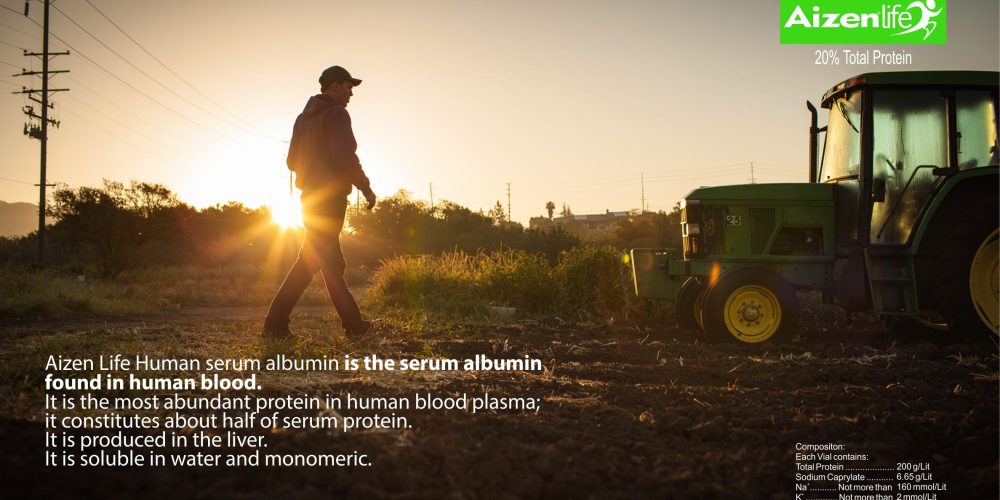
Human Albumin 20% Injection IP (Aizen Life) Taj Pharma
Overview
INTRODUCTION OF AIZEN LIFE INJECTION
Aizen Life 20 % Injection is used to treat blood volume loss. It works by replacing the body fluids lost due to excessive trauma, bleeding, surgery, or kidney dialysis. Thus, it is helpful in treating low blood albumin levels.
This injection is given under the supervision of a healthcare professional. You should not take it if you have any known allergy from this injection. Before taking it, inform the doctor you are suffering from any severe heart disease. Your doctor may check blood pressure and ask to get regular blood tests while you are taking this medication.
It may cause side effects like flushing (sense of warmth in the face, ears, neck, and trunk), nausea and fever.
USES OF AIZEN LIFE INJECTION
- Nephrotic syndrome
AIZEN LIFE INJECTION SIDE EFFECTS
- Vomiting
- Flushing (sense of warmth in the face, ears, neck, and trunk)
- Fever
- Nausea
- Chills
- Hives
- Tachycardia
HOW TO USE AIZEN LIFE INJECTION
HOW AIZEN LIFE INJECTION WORKS
AIZEN LIFE INJECTION RELATED WARNINGS
Alcohol
Pregnancy
Lactation
Driving
Kidney
Liver
WHAT IF YOU MISS A DOSE OF AIZEN LIFE INJECTION?
Human Albumin 20%, solution for infusion (Aizen Life) Taj Pharma
- Name of the medicinal product
Human Albumin 20%, solution for infusion (Aizen Life) Taj Pharma
- Qualitative and quantitative composition
Human Albumin (Aizen Life) 20% is a solution containing 200 g/l of total protein of which at least 95% is human albumin.
Each vial of 100 ml contains 20 g of human plasma protein of which at least 95% is human albumin.
The product has a hyperoncotic effect.
Excipients with known effect:
For the full list of excipients, see 6.1.
- Pharmaceutical form
Solution for infusion.
A clear, slightly viscous liquid; it is almost colourless, yellow, amber or green.
- Clinical particulars
4.1 Therapeutic indications
Restoration and maintenance of circulating blood volume where volume deficiency has been demonstrated and use of a colloid is appropriate.
The choice of albumin rather than artificial colloid will depend on the clinical situation of the individual patient, based on official recommendations.
4.2 Posology and method of administration
The concentration of the albumin preparation, dosage and the infusion-rate should be adjusted to the patient’s individual requirements.
Posology
The dose required depends on the size of the patient, the severity of trauma or illness and on continuing fluid or protein losses. Measures of adequacy of circulating volume and not plasma albumin levels should be used to determine the dose required.
If human albumin is to be administered, haemodynamic performance should be monitored regularly; this may include:
- arterial blood pressure and pulse rate
- central venous pressure
- pulmonary artery wedge pressure
- urine output
- electrolyte
- haemaotcrit / haemoglobin
Method of administration
Human albumin can be directly administered by the intravenous route, or it can also be diluted in an isotonic solution (e.g. 0.9% sodium chloride).
The infusion rate should be adjusted according to the individual circumstances and the indication.
In plasma exchange the infusion-rate should be adjusted to the rate of removal.
4.3 Contraindications
Hypersensitivity to albumin preparations or to any of the excipients listed in section 6.1.
4.4 Special warnings and precautions for use
Suspicion of allergic or anaphylactic type reactions requires immediate discontinuation of the injection. In case of shock, standard medical treatment for shock should be implemented.
Albumin should be used with caution in conditions where hypervolaemia and its consequences or haemodilution could represent a special risk for the patient. Examples of such conditions are:
- Decompensated cardiac insufficiency
- Hypertension
- Oesophageal varices
- Pulmonary oedema
- Haemorrhagic diathesis
- Severe anaemia
- Renal and post-renal anuria
The colloid-osmotic effect of human albumin 200 g/l is approximately four times that of blood plasma. Therefore, when concentrated albumin is administered, care must be taken to ensure adequate hydration of the patient. Patients should be monitored carefully to guard against circulatory overload and hyperhydration.
200-250 g/l human albumin solutions are relatively low in electrolytes compared to the 40-50 g/l human albumin solutions. When albumin is given, the electrolyte status of the patient should be monitored (see section 4.2) and appropriate steps taken to restore or maintain the electrolyte balance.
Albumin solutions must not be diluted with water for injections as this may cause haemolysis in recipients.
If comparatively large volumes are to be replaced, controls of coagulation and haematocrit are necessary. Care must be taken to ensure adequate substitution of other blood constituents (coagulation factors, electrolytes, platelets and erythrocytes).
Hypervolaemia may occur if the dosage and rate of infusion are not adjusted to the patient’s circulatory situation. At the fist clinical signs of cardiovascular overload (headache, dyspnoea, jugular vein congestion), or increased blood pressure, raised venous pressure and pulmonary oedema, the infusion is to be stopped immediately.
Standard measures to prevent infections resulting from the use of medicinal products prepared from human blood or plasma include selection of donors, screening of individual donations and plasma pools for specific markers of infection and the inclusion of effective manufacturing steps for the inactivation/removal of viruses. Despite this, when medicinal products prepared from human blood or plasma are administered, the possibility of transmitting infective agents cannot be totally excluded. This also applies to unknown or emerging viruses and other pathogens.
There are no reports of virus transmissions with albumin manufactured to European Pharmacopoeia specifications by established processes.
It is strongly recommended that every time that Human Albumin (Aizen Life) 20% is administered to a patient, the name and batch number of the product are recorded in order to maintain a link between the patient and the batch of the product.
This medicinal product contains 122 mmol sodium per litre. To be taken into consideration by patients on a controlled sodium diet.
4.5 Interaction with other medicinal products and other forms of interaction
No specific interactions of human albumin with other products are known.
4.6 Fertility, pregnancy and lactation
The safety of Human Albumin (Aizen Life) 20% for use in human pregnancy has not been established in controlled clinical trials. However, clinical experience with albumin suggests that no harmful effects on the course of pregnancy, or on the fetus and the neonate are to be expected.
Experimental animal studies are insufficient to assess the safety with respect to reproduction, development of the embryo or fetus, the course of gestation and peri- and postnatal development.
However, human albumin is a normal constituent of human blood.
4.7 Effects on ability to drive and use machines
No effects on ability to drive and use machines have been observed.
4.8 Undesirable effects
Mild reactions such as flush, urticaria, fever and nausea occur rarely. These reactions normally disappear rapidly when the infusion rate is slowed down or the infusion is stopped. Very rarely, severe reactions as far as shock may occur. In these cases, the infusion should be stopped and an appropriate treatment should be initiated.
For safety with respect to transmissible agents, see 4.4.
Reporting of suspected adverse reactions
Reporting suspected adverse reactions after authorisation of the medicinal product is important. It allows continued monitoring of the benefit/risk balance of the medicinal product.
4.9 Overdose
Hypervolaemia may occur if the dosage and rate of infusion are too high. At the first clinical signs of cardiovascular overload (headache, dyspnoea, jugular vein congestion), or increased blood pressure, raised central venous pressure and pulmonary oedema, the infusion should be stopped immediately and the patient’s haemodynamic parameters carefully monitored.
- Pharmacological properties
5.1 Pharmacodynamic properties
Pharmacotherapeutic group: plasma substitutes and plasma protein fractions,
Human albumin accounts quantitatively for more than half of the total protein in the plasma and represents about 10% of the protein synthesis activity of the liver.
Physiochemical data: Human albumin 40 to 50 g/l is mildly hypooncotic to normal plasma. Human albumin 200 g/l has a corresponding hyperoncotic effect.
The most important physiological functions of albumin results from its contribution to oncotic pressure of the blood and transport function. Albumin stabilises circulating blood volume and is a carrier of hormones, enzymes, medicinal products and toxins.
5.2 Pharmacokinetic properties
Under normal situations the total exchangeable albumin pool is 4-5 g/kg body weight, of which 40-45% is present intravascularly and 55-60% in the extravascular space. Increased capillary permeability will alter albumin kinetics and abnormal distribution may occur in conditions such as severe burns or septic shock.
Under normal conditions the half-life of albumin is on average about 19 days. The balance between synthesis and breakdown is normally achieved by feed-back regulation. Elimination is predominantly intracellular and due to lysosome proteases.
In healthy subjects, less than 10% of infused albumin leaves the intravascular compartment during the first 2 hours following infusion. There is considerable individual variation in the effect on plasma volume. In some patients the plasma volume can remain increased for some hours. However, in critically ill patients, albumin can leak out of the vascular space in substantial amounts at an unpredictable rate.
5.3 Preclinical safety data
Human albumin is a normal constituent of the human plasma and acts like the physiological albumin.
In animals, singledose toxicity testing is of little relevance and does not permit the evaluation of toxic or lethal doses or of a dose-effect relationship. Repeateddose toxicity testing is impracticable due to the development of antibodies to heterologous protein in animal models.
To date, human albumin has not been reported to be associated with embryo-fetal toxicity, oncogenic or mutagenic potential.
No signs of acute toxicity have been described in animal models.
- Pharmaceutical particulars
6.1 List of excipients
Sodium caprylate (16 mmol/l), Sodium chloride (63 mmol/l), N-acetyltryptophanate (16 mmol/l), water for injections.
6.2 Incompatibilities
Human albumin must not be mixed with other medicinal products (except the recommended diluent), whole blood and packed red blood cells.
6.3 Shelf life
3 years
6.4 Special precautions for storage
Do not store above 25°C. Do not freeze.
Keep the container in the outer carton in order to protect from light.
6.5 Nature and contents of container
50 ml or 100 ml of a solution in a vial (Type II glass) with a grey rubber stopper (bromobutyl) and a cap (aluminium) – pack size of one vial.
6.6 Special precautions for disposal and other handling
The solution can be directly administered by the intravenous route, or it can be diluted in an isotonic solution (e.g. 0.9% sodium chloride).
Albumin solutions must not be diluted with water for injections as this may cause haemolysis in recipients.
If large volumes are administered, the product should be warmed to room or body temperature before use.
The solution should be clear or slightly opalescent. Do not use solutions which are cloudy or have deposits. This may indicate that the protein is unstable or that the solution has become contaminated.
Once the container has been opened, the contents should be used immediately. Any unused product should be disposed of in accordance with local requirements.
7. Manufactured in India By:
Taj Pharmaceuticals Ltd;
Survey No. 622/2/1/4, Dedhrota, Himatnagar-Vijapur Highway,
Dist-Sabarkantha, 383220, Gujarat.
PACKAGE LEAFLET: INFORMATION FOR THE USER
Human Albumin 20%, solution for infusion (Aizen Life) Taj Pharma
Human albumin
Read this entire leaflet carefully before you start using this medicine, because it contains important information for you.
- Keep this leaflet. You may need to read it again.
- If you have any further questions, ask your doctor or pharmacist.
- This medicine has been prescribed for you only. Do not pass it on to others. It may harm them, even if their signs of illness are the same as yours.
- If you get any side effects, talk to your doctor or pharmacist. This includes any possible side effects not listed in this leaflet. See section 4.
What is in this leaflet:
- What Human Albumin (Aizen Life) 20% is and what it is used for
- What you need to know before you are given Human Albumin (Aizen Life) 20%
- How you are given Human Albumin (Aizen Life) 20%
- Possible side effects
- How to store Human Albumin (Aizen Life) 20%
- Contents of the pack and other information1. What Human Albumin (Aizen Life) 20% is and what it is used for
Human Albumin (Aizen Life) 20% is a solution for infusion (into a vein). 1000 ml solution contains 200 g human plasma protein of which at least 95% is human albumin.
Human Albumin (Aizen Life) 20% is used to restore and maintain circulating blood volume where there is a low blood volume and the use of a colloid, such as albumin, is required.
- What you need to know before you are given Human Albumin (Aizen Life) 20%
You will not receive Human Albumin (Aizen Life) 20% if:
- you are allergic to albumin preparations or to any of the other ingredients of this medicine (listed in section 6).
Warnings and precautions:
Suspicion of allergic or anaphylactic type reactions requires an immediate stop of the injection. In case of shock, standard medical treatment for shock should be applied.
The infusion will also be stopped if you develop any of the following conditions as a sign of cardiovascular overload (hypervolaemia):
- headache
- dyspnoea (difficulties in breathing)
- jugular vein congestion (a build up of fluid in a neck vein)
- increased blood pressure
- raised venous pressure (increased pressure in the veins)
pulmonary oedema (water on the lungs)
You should tell your doctor if you suffer from any of the following conditions:
- Decompensated cardiac insufficiency (heart failure)
- Hypertension (high blood pressure)
- Oesophageal varices (enlarged veins in the gullet)
- Pulmonary oedema (water on the lungs)
- Haemorrhagic diathesis (tendency to abnormal or spontaneous bleeding)
- Severe anaemia (reduced red blood cells)
- Renal and post-renal anuria (decreased or absent urine production)
He/She will take the appropriate precautions. You will also be monitored by your doctor to check your circulatory situation with the electrolyte balance and blood volume.
When medicines are made from human blood or plasma, certain measures are put in place to prevent infections being passed on to patients. These include careful selection of blood and plasma donors to make sure those at risk of carrying infections are excluded, and the testing of each donation and pools of plasma for signs of virus/infections. Manufacturers of these products also include steps in the processing of the blood or plasma that can inactivate or remove viruses. Despite these measures, when medicines prepared from human blood or plasma are administered, the possibility of passing on infection cannot be totally excluded. This also applies to any unknown or emerging viruses or other types of infections.
There are no reports of virus infections with albumin manufactured to European Pharmacopoeia specifications by established processes.
It is strongly recommended that every time you receive a dose of Human Albumin (Aizen Life) 20% the name and batch number of the product are recorded in order to maintain a record of the batches used.
Other medicines and Human Albumin (Aizen Life) 20%
Tell your doctor or pharmacist if you are using, have recently used or might use any other medicines.
Pregnancy and breast-feeding
If you are pregnant or breast-feeding, think you may be pregnant or are planning to have a baby, ask your doctor or pharmacist for advice before taking this medicine. If you have already told your doctor then follow any instructions that may have been given to you.
Driving and using machines
Human Albumin (Aizen Life) 20% has no known effects on the ability to drive or use machines.
Human Albumin (Aizen Life) 20% contains sodium
This medicinal product contains 122 mmol sodium per litre. To be taken into consideration by patients on a controlled sodium diet.
- How you are given Human Albumin (Aizen Life) 20%
Human Albumin (Aizen Life) 20% treatment will usually be given in hospital by a doctor or a nurse. Human albumin can be given directly into a vein or diluted in 0.9% sodium chloride.
Dosage and Frequency of Administration
The amount of Human Albumin (Aizen Life) 20% you receive depends on your size, the illness, and on fluid or protein losses.
Your doctor will calculate the dose of Human Albumin (Aizen Life) 20% and how often you will receive it to obtain the correct levels in your blood.
If you are given more Human Albumin (Aizen Life) 20% than you should
This is very unlikely but your doctor will know what to do if this happens.
If you have any further questions on the use of the medicine, ask your doctor or pharmacist.
- Possible side effects
Like all medicines, this medicine can cause side effects, although not everybody gets them.
The following side effects have been reported:
- flush,
- urticaria (nettle rash),
- fever and nausea (feeling sick). These occur rarely.
Very rarely, severe reactions such as shock may occur. If this happens the infusion will be stopped and the appropriate treatment will be started.
Reporting of side effects
If you get any side effects, talk to your doctor,pharmacist or nurse. This includes any possible side effects not listed in this leaflet.
- How to store Human Albumin (Aizen Life) 20%
Keep this medicine out of the sight and reach of children.
Do not use this medicine after the expiry date which is stated on label and outer carton. Keep the container in the outer-carton, in order to protect from light.
Do not store above 25ºC.
Do not freeze.
The product, once opened, should be used immediately.
Immediately before administration, check that the solution is clear. The product must not be used if any cloudiness or particles are visible.
Do not throw away any medicines via wastewater or household waste. Ask your pharmacist how to throw away medicines you no longer use. These measures will help protect the environment.
- Contents of the pack and other information
What Human Albumin (Aizen Life) 20% contains
Each vial with 100 ml solution contains 20 g of human plasma protein of which at least 95% is human albumin.
The other ingredients are: sodium caprylate (16 mmol/l), sodium chloride (63 mmol/l), N- acetyltryptophanate (16 mmol/l), water for injections..
What Human Albumin (Aizen Life) 20% looks like and contents of the pack
A clear, slightly viscous liquid; it is almost colourless, yellow, amber or green.
Glass vial with 50 ml Glass vial with 100 ml
- Manufactured in India By:
Taj Pharmaceuticals Ltd;
Survey No. 622/2/1/4, Dedhrota,
Himatnagar-Vijapur Highway,
Dist-Sabarkantha, 383220, Gujarat.