
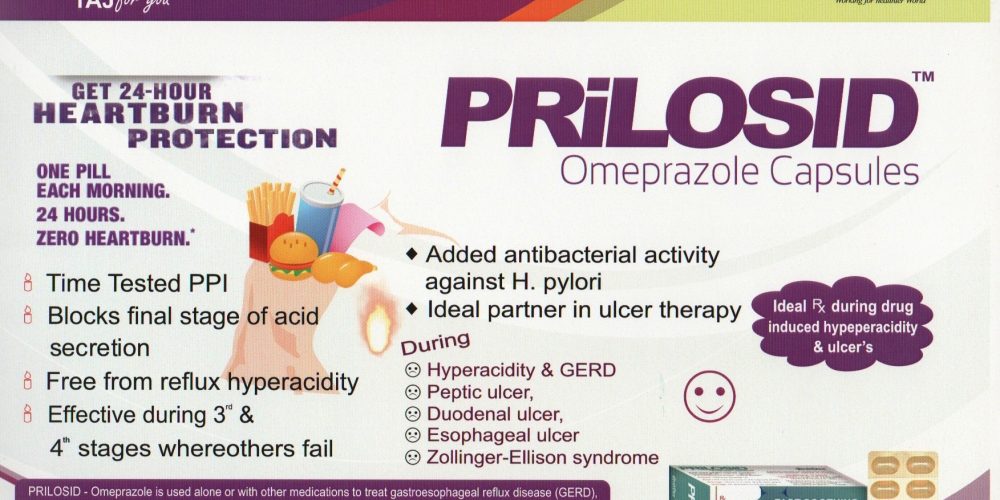
Omeprazole Gastro resistance Capsules IP 40mg (Prilosid) Taj Pharma
Overview
INTRODUCTION
Prilosid 40mg Capsule is a medicine which reduces the amount of acid produced in your stomach. It is used to treat heartburn, acid reflux and problems in your food pipe. It is also used to prevent and treat stomach ulcers.
You should take Prilosid 40mg Capsule as your doctor advises. The dose will depend on what you are being treated for, but it should be the lowest dose for the shortest amount of time needed to treat your condition. Normally it should be swallowed whole about an hour before a meal and at the same time each day. It may take up to a few weeks to work properly but your doctor will tell you how long you need to be taking it for. You should keep on taking it as prescribed even if your symptoms disappear quickly. If you are taking this medicine for a long time, your doctor may carry out regular tests to check your levels of magnesium which can fall with this medicine.
Common side effects include headache, constipation or diarrhoea, stomach pain and feeling or being sick. These tend to be mild but talk to your doctor if they bother you or do not go away. The risk of side effects may increase the longer you take this medicine. Serious side effects are rare, but some need immediate medical attention. Ask your doctor what these are. You may be more likely to have a broken bone if you take it for a long time. It is best to avoid foods that seem to make your symptoms worse, such as rich, spicy and fatty foods. It also helps to cut down on caffeinated drinks, such as tea, coffee and cola, as well as alcohol.
Prilosid 40mg Capsule is not suitable for some people. Before taking this medicine, you need to tell your doctor if you have severe liver problems, are taking medicines for HIV, have had an allergic reaction to similar medicines in the past or have osteoporosis. Alcohol does not interfere with the way Prilosid 40mg Capsule works. However, drinking alcohol makes your stomach produce more acid than normal. This medicine can make you feel dizzy, sleepy, or affect your vision. If this happens, do not drive, cycle or use machinery or tools until you feel better. It is not usually recommended during pregnancy and breastfeeding.
USES OF PRILOSID CAPSULE
SIDE EFFECTS OF PRILOSID CAPSULE
- Headache
- Stomach pain
- Nausea
- Flatulence
- Diarrhea
HOW TO USE PRILOSID CAPSULE
HOW PRILOSID CAPSULE WORKS
SAFETY ADVICE
Alcohol
Pregnancy
Breastfeeding
Driving
Prilosid 40mg Capsule may cause dizziness and visual disturbances. This may affect your driving ability.
Kidney
Liver
A lower dose may be advised in patients with liver disease and who have to take this medicine for a long time.
WHAT IF YOU FORGET TO TAKE PRILOSID CAPSULE?
Omeprazole Gastro resistance Capsules IP 40mg (Prilosid) Taj Pharma
1. Name of the medicinal product
a) Omeprazole Gastro-resistance Capsules IP 10mg (Prilosid) Taj Pharma
b) Omeprazole Gastro-resistance Capsules IP 20mg (Prilosid) Taj Pharma
c) Omeprazole Gastro-resistance Capsules IP 40mg (Prilosid) Taj Pharma
2. Qualitative and quantitative composition
a) Each Omeprazole Gastro-resistance Capsules IP 10mg (Prilosid) Contains:
Omeprazole 10mg
Excipients q.s.
b) Each Omeprazole Gastro-resistance Capsules IP 20mg (Prilosid) Contains:
Omeprazole 20mg
Excipients q.s.
c) Each Omeprazole Gastro-resistance Capsules IP 40mg (Prilosid) Contains:
Omeprazole 40mg
Excipients q.s.
- Pharmaceutical form
Capsule, hard.
- Clinical particulars
4.1 Therapeutic indications
Omeprazole capsules are indicated for:
Adults
- Treatment of duodenal ulcers
- Prevention of relapse of duodenal ulcers
- Treatment of gastric ulcers
- Prevention of relapse of gastric ulcers
- In combination with appropriate antibiotics, Helicobacter pylori (H. pylori) eradication in peptic ulcer disease
- Treatment of NSAID-associated gastric and duodenal ulcers
- Prevention of NSAID-associated gastric and duodenal ulcers in patients at risk
- Treatment of reflux oesophagitis
- Long-term management of patients with healed reflux oesophagitis
- Treatment of symptomatic gastro-oesophageal reflux disease
- Treatment of Zollinger-Ellison syndrome
4.2 Posology and method of administration
Posology
Adults
Treatment of duodenal ulcers
The recommended dose in patients with an active duodenal ulcer is Omeprazole 20 mg once daily. In most patients healing occurs within two weeks. For those patients who may not be fully healed after the initial course, healing usually occurs during a further two weeks treatment period. In patients with poorly responsive duodenal ulcer Omeprazole 40 mg once daily is recommended and healing is usually achieved within four weeks.
Prevention of relapse of duodenal ulcers
For the prevention of relapse of duodenal ulcer in H. pylori negative patients or when H. pylori eradication is not possible the recommended dose is Omeprazole 20 mg once daily. In some patients a daily dose of 10 mg may be sufficient. In case of therapy failure, the dose can be increased to 40 mg.
Treatment of gastric ulcers
The recommended dose is Omeprazole 20 mg once daily. In most patients healing occurs within four weeks. For those patients who may not be fully healed after the initial course, healing usually occurs during a further four weeks treatment period. In patients with poorly responsive gastric ulcer Omeprazole 40 mg once daily is recommended and healing is usually achieved within eight weeks.
Prevention of relapse of gastric ulcers
For the prevention of relapse in patients with poorly responsive gastric ulcer the recommended dose is Omeprazole 20 mg once daily. If needed the dose can be increased to Omeprazole 40 mg once daily.
- pylori eradication in peptic ulcer disease
For the eradication of H. pylori the selection of antibiotics should consider the individual patient’s drug tolerance, and should be undertaken in accordance with national, regional and local resistance patterns and treatment guidelines.
- Omeprazole 20 mg + clarithromycin 500 mg + amoxicillin 1,000 mg, each twice daily for one week, or
- Omeprazole 20 mg + clarithromycin 250 mg (alternatively 500 mg) + metronidazole 400 mg (or 500 mg or tinidazole 500 mg), each twice daily for one week or
- Omeprazole 40 mg once daily with amoxicillin 500 mg and metronidazole 400 mg (or 500 mg or tinidazole 500 mg), both three times a day for one week.
In each regimen, if the patient is still H. pylori positive, therapy may be repeated.
Treatment of NSAID-associated gastric and duodenal ulcers
For the treatment of NSAID–associated gastric and duodenal ulcers, the recommended dose is Omeprazole 20 mg once daily. In most patients healing occurs within four weeks. For those patients who may not be fully healed after the initial course, healing usually occurs during a further four weeks treatment period.
Prevention of NSAID-associated gastric and duodenal ulcers in patients at risk
For the prevention of NSAID–associated gastric ulcers or duodenal ulcers in patients at risk (age> 60, previous history of gastric and duodenal ulcers, previous history of upper GI bleeding) the recommended dose is Omeprazole 20 mg once daily.
Treatment of reflux oesophagitis
The recommended dose is Omeprazole 20 mg once daily. In most patients healing occurs within four weeks. For those patients who may not be fully healed after the initial course, healing usually occurs during a further four weeks treatment period.
In patients with severe oesophagitis Omeprazole 40 mg once daily is recommended and healing is usually achieved within eight weeks.
Long-term management of patients with healed reflux oesophagitis
For the long-term management of patients with healed reflux oesophagitis the recommended dose is Omeprazole 10 mg once daily. If needed, the dose can be increased to Omeprazole 20-40 mg once daily.
Treatment of symptomatic gastro-oesophageal reflux disease
The recommended dose is Omeprazole 20 mg daily. Patients may respond adequately to 10 mg daily, and therefore individual dose adjustment should be considered.
If symptom control has not been achieved after four weeks treatment with Omeprazole 20 mg daily, further investigation is recommended.
Treatment of Zollinger-Ellison syndrome
In patients with Zollinger-Ellison syndrome the dose should be individually adjusted and treatment continued as long as clinically indicated. The recommended initial dose is Omeprazole 60 mg daily. All patients with severe disease and inadequate response to other therapies have been effectively controlled and more than 90% of the patients maintained on doses of Omeprazole 20-120 mg daily. When dose exceed Omeprazole 80 mg daily, the dose should be divided and given twice daily.
Paediatric population
This formulation is not suitable for children.
Special populations
Renal impairment
Dose adjustment is not needed in patients with impaired renal function (see section 5.2).
Hepatic impairment
In patients with impaired hepatic function a daily dose of 10–20 mg may be sufficient (see section 5.2).
Elderly
Dose adjustment is not needed in the elderly (see section 5.2).
Method of administration
It is recommended to take Omeprazole capsules in the morning, swallowed whole with half a glass of water. The capsules must not be chewed or crushed.
4.3 Contraindications
Hypersensitivity to the active substance, substituted benzimidazoles or to any of the excipients listed in section 6.1.
Omeprazole like other proton pump inhibitors (PPIs) must not be used concomitantly with nelfinavir (see section 4.5).
4.4 Special warnings and precautions for use
In the presence of any alarm symptom (e.g. significant unintentional weight loss, recurrent vomiting, dysphagia, haematemesis or melena) and when gastric ulcer is suspected or present, malignancy should be excluded, as treatment may alleviate symptoms and delay diagnosis.
Co-administration of atazanavir with proton pump inhibitors is not recommended (see section 4.5). If the combination of atazanavir with a proton pump inhibitor is judged unavoidable, close clinical monitoring (e.g virus load) is recommended in combination with an increase in the dose of atazanavir to 400 mg with 100 mg of ritonavir; omeprazole 20 mg should not be exceeded.
Omeprazole, as all acid-blocking medicines, may reduce the absorption of vitamin B12 (cyanocobalamin) due to hypo- or achlorhydria. This should be considered in patients with reduced body stores or risk factors for reduced vitamin B12 absorption on long-term therapy.
Omeprazole is a CYP2C19 inhibitor. When starting or ending treatment with omeprazole, the potential for interactions with drugs metabolised through CYP2C19 should be considered. An interaction is observed between clopidogrel and omeprazole (see section 4.5). The clinical relevance of this interaction is uncertain. As a precaution, concomitant use of omeprazole and clopidogrel should be discouraged.
Hypomagnesaemia
Severe hypomagnesaemia has been reported in patients treated with proton pump inhibitors (PPIs) like omeprazole for at least three months, and in most cases for a year. Serious manifestations of hypomagnesaemia such as fatigue, tetany, delirium, convulsions, dizziness and ventricular arrhythmia can occur but they may begin insidiously and be overlooked. In most affected patients, hypomagnesaemia improved after magnesium replacement and discontinuation of the PPI.
For patients expected to be on prolonged treatment or who take PPIs with digoxin or drugs that may cause hypomagnesaemia (e.g., diuretics), health care professionals should consider measuring magnesium levels before starting PPI treatment and periodically during treatment.
Proton pump inhibitors, especially if used in high doses and over long durations (>1 year), may modestly increase the risk of hip, wrist and spine fracture, predominantly in the elderly or in presence of other recognised risk factors. Observational studies suggest that proton pump inhibitors may increase the overall risk of fracture by 10–40%. Some of this increase may be due to other risk factors. Patients at risk of osteoporosis should receive care according to current clinical guidelines and they should have an adequate intake of vitamin D and calcium.
Subacute cutaneous lupus erythematosus (SCLE)
Proton pump inhibitors are associated with very infrequent cases of SCLE. If lesions occur, especially in sun-exposed areas of the skin, and if accompanied by arthralgia, the patient should seek medical help promptly and the health care professional should consider stopping Omeprazole capsules. SCLE after previous treatment with a proton pump inhibitor may increase the risk of SCLE with other proton pump inhibitors.
Interference with laboratory tests
Increased Chromogranin A (CgA) level may interfere with investigations for neuroendocrine tumours. To avoid this interference, Omeprazole 20mg gastro-resistant capsules treatment should be stopped for at least 5 days before CgA measurements (see section 5.1). If CgA and gastrin levels have not returned to reference range after initial measurement, measurements should be repeated 14 days after cessation of proton pump inhibitor treatment.
Some children with chronic illnesses may require long-term treatment although it is not recommended.
Omeprazole capsule contains lactose. Patients with rare hereditary problems of galactose intolerance, the Lapp lactase deficiency or glucose-galactose malabsorption should not take this medicine.
Treatment with proton pump inhibitors may lead to slightly increased risk of gastrointestinal infections such as Salmonella and Campylobacter and, in hospitalised patients, possibly also Clostridium difficile (see section 5.1).
As in all long-term treatments, especially when exceeding a treatment period of 1 year, patients should be kept under regular surveillance.
4.5 Interaction with other medicinal products and other forms of interaction
Effects of omeprazole on the pharmacokinetics of other active substances
Active substances with pH dependent absorption
The decreased intragastric acidity during treatment with omeprazole might increase or decrease the absorption of active substances with a gastric pH dependent absorption.
Nelfinavir, atazanavir
The plasma levels of nelfinavir and atazanavir are decreased in case of co-administration with omeprazole.
Concomitant administration of omeprazole with nelfinavir is contraindicated (see section 4.3). Co-administration of omeprazole (40 mg once daily) reduced mean nelfinavir exposure by ca. 40% and the mean exposure of the pharmacologically active metabolite M8 was reduced by ca. 75 –90%. The interaction may also involve CYP2C19 inhibition.
Concomitant administration of omeprazole with atazanavir is not recommended (see section 4.4). Concomitant administration of omeprazole (40 mg once daily) and atazanavir 300 mg/ritonavir 100 mg to healthy volunteers resulted in a 75% decrease of the atazanavir exposure. Increasing the atazanavir dose to 400 mg did not compensate for the impact of omeprazole on atazanavir exposure. The co-administration of omeprazole (20 mg once daily) with atazanavir 400 mg/ritonavir 100 mg to healthy volunteers resulted in a decrease of approximately 30% in the atazanavir exposure as compared to atazanavir 300 mg/ritonavir 100 mg once daily.
Digoxin
Concomitant treatment with omeprazole (20 mg daily) and digoxin in healthy subjects increased the bioavailability of digoxin by 10%. Digoxin toxicity has been rarely reported. However caution should be exercised when omeprazole is given at high doses in elderly patients. Therapeutic drug monitoring of digoxin should be then be reinforced.
Clopidogrel
Results from studies in healthy subjects have shown a pharmacokinetic (PK)/pharmacodynamic (PD) interaction between clopidogrel (300 mg loading dose/75 mg daily maintenance dose) and omeprazole (80 mg p.o. daily) resulting in a decreased exposure to the active metabolite of clopidogrel by an average of 46% and a decreased maximum inhibition of (ADP induced) platelet aggregation by an average of 16%.
Inconsistent data on the clinical implications of a PK/PD interaction of omeprazole in terms of major cardiovascular events have been reported from both observational and clinical studies. As a precaution, concomitant use of omeprazole and clopidogrel should be discouraged (see section 4.4).
Other active substances
The absorption of posaconazole, erlotinib, ketoconazole and itraconazole is significantly reduced and thus clinical efficacy may be impaired. For posaconazole and erlotinib concomitant use should be avoided.
Active substances metabolised by CYP2C19
Omeprazole is a moderate inhibitor of CYP2C19, the major omeprazole metabolising enzyme. Thus, the metabolism of concomitant active substances also metabolised by CYP2C19, may be decreased and the systemic exposure to these substances increased. Examples of such drugs are R-warfarin and other vitamin K antagonists, cilostazol, diazepam and phenytoin.
Cilostazol
Omeprazole, given in doses of 40 mg to healthy subjects in a cross-over study, increased Cmax and AUC for cilostazol by 18% and 26% respectively, and one of its active metabolites by 29% and 69% respectively.
Phenytoin
Monitoring phenytoin plasma concentration is recommended during the first two weeks after initiating omeprazole treatment and, if a phenytoin dose adjustment is made, monitoring and a further dose adjustment should occur upon ending omeprazole treatment.
Unknown mechanism
Saquinavir
Concomitant administration of omeprazole with saquinavir/ritonavir resulted in increased plasma levels up to approximately 70% for saquinavir associated with good tolerability in HIV-infected patients.
Tacrolimus
Concomitant administration of omeprazole has been reported to increase the serum levels of tacrolimus. A reinforced monitoring of tacrolimus concentrations as well as renal function (creatinine clearance) should be performed, and dosage of tacrolimus adjusted if needed.
Methotrexate
When given together with proton-pump inhibitors, methotrexate levels have been reported to increase in some patients. In high-dose methotrexate administration a temporary withdrawal of omeprazole may need to be considered.
Effects of other active substances on the pharmacokinetics of omeprazole
Inhibitors of CYP2C19 and/or CYP3A4
Since omeprazole is metabolised by CYP2C19 and CYP3A4, active substances known to inhibit CYP2C19 or CYP3A4 (such as clarithromycin and voriconazole) may lead to increased omeprazole serum levels by decreasing omeprazole’s rate of metabolism. Concomitant voriconazole treatment resulted in more than doubling of the omeprazole exposure. As high doses of omeprazole have been well-tolerated adjustment of the omeprazole dose is not generally required. However, dose adjustment should be considered in patients with severe hepatic impairment and if long-term treatment is indicated.
Inducers of CYP2C19 and/or CYP3A4
Active substances known to induce CYP2C19 or CYP3A4 or both (such as rifampicin and St John’s wort) may lead to decreased omeprazole serum levels by increasing omeprazole’s rate of metabolism.
4.6 Fertility, pregnancy and lactation
Pregnancy
Results from three prospective epidemiological studies (more than 1000 exposed outcomes) indicate no adverse effects of omeprazole on pregnancy or on the health of the foetus/newborn child. Omeprazole can be used during pregnancy.
Breastfeeding
Omeprazole is excreted in breast milk but is not likely to influence the child when therapeutic doses are used.
Fertility
Animal studies with the racemic mixture omeprazole, given by oral administration do not indicate effects with respect to fertility.
4.7 Effects on ability to drive and use machines
Omeprazole is not likely to affect the ability to drive or use machines. Adverse drug reactions such as dizziness and visual disturbances may occur (see section 4.8). If affected, patients should not drive or operate machinery.
4.8 Undesirable effects
Summary of the safety profile
The most common side effects (1-10% of patients) are headache, abdominal pain, constipation, diarrhoea, flatulence and nausea/vomiting.
Tabulated list of adverse reactions
The following adverse drug reactions have been identified or suspected in the clinical trials programme for omeprazole and post-marketing. None was found to be dose-related. Adverse reactions listed below are classified according to frequency and System Organ Class (SOC). Frequency categories are defined according to the following convention: Very common (≥ 1/10), Common (≥ 1/100 to < 1/10), Uncommon (≥ 1/1,000 to < 1/100), Rare (≥ 1/10,000 to < 1/1,000), Very rare (< 1/10,000), Not known (cannot be estimated from the available data).
| SOC/frequency | Adverse reaction |
| Blood and lymphatic system disorders | |
| Rare: | Leukopenia, thrombocytopenia |
| Very rare: | Agranulocytosis, pancytopenia |
| Immune system disorders | |
| Rare: | Hypersensitivity reactions e.g. fever, angioedema and anaphylactic reaction/shock |
| Metabolism and nutrition disorders | |
| Rare: | Hyponatraemia |
| Not known: | Hypomagnesaemia; severe hypomagnesaemia may result in hypocalcaemia. Hypomagnesaemia may also be associated with hypokalaemia. |
| Psychiatric disorders | |
| Uncommon: | Insomnia |
| Rare: | Agitation, confusion, depression |
| Very rare: | Aggression, hallucinations |
| Nervous system disorders | |
| Common: | Headache |
| Uncommon: | Dizziness, paraesthesia, somnolence |
| Rare: | Taste disturbance |
| Eye disorders | |
| Rare: | Blurred vision |
| Ear and labyrinth disorders | |
| Uncommon: | Vertigo |
| Respiratory, thoracic and mediastinal disorders | |
| Rare: | Bronchospasm |
| Gastrointestinal disorders | |
| Common: | Abdominal pain, constipation, diarrhoea, flatulence, nausea/vomiting, fundic gland polyps (benign) |
| Rare: | Dry mouth, stomatitis, gastrointestinal candidiasis |
| Not known: | Microscopic colitis |
| Hepatobiliary disorders | |
| Uncommon: | Increased liver enzymes |
| Rare: | Hepatitis with or without jaundice |
| Very rare: | Hepatic failure, encephalopathy in patients with pre-existing liver disease |
| Skin and subcutaneous tissue disorders | |
| Uncommon: | Dermatitis, pruritus, rash, urticaria |
| Rare: | Alopecia, photosensitivity |
| Very rare: | Erythema multiforme, Stevens-Johnson syndrome, toxic epidermal necrolysis (TEN) |
| Not known: | Subacute cutaneous lupus erythematosus (see section 4.4). |
| Musculoskeletal and connective tissue disorders | |
| Uncommon: | Fracture of the hip, wrist or spine (see section 4.4) |
| Rare: | Arthralgia, myalgia |
| Very rare: | Muscular weakness |
| Renal and urinary disorders | |
| Rare: | Interstitial nephritis |
| Reproductive system and breast disorders | |
| Very rare: | Gynaecomastia |
| General disorders and administration site conditions | |
| Uncommon: | Malaise, peripheral oedema |
| Rare: | Increased sweating |
Paediatric population
The safety of omeprazole has been assessed in a total of 310 children aged 0 to 16 years with acid-related disease. There are limited long term safety data from 46 children who received maintenance therapy of omeprazole during a clinical study for severe erosive oesophagitis for up to 749 days. The adverse event profile was generally the same as for adults in short- as well as in long-term treatment. There are no long term data regarding the effects of omeprazole treatment on puberty and growth.
Reporting of suspected adverse reactions
Reporting suspected adverse reactions after authorisation of the medicinal product is important. It allows continued monitoring of the benefit/risk balance of the medicinal product.
4.9 Overdose
There is limited information available on the effects of overdoses of omeprazole in humans. In the literature, doses of up to 560 mg have been described, and occasional reports have been received when single oral doses have reached up to 2,400 mg omeprazole (120 times the usual recommended clinical dose). Nausea, vomiting, dizziness, abdominal pain, diarrhoea and headache have been reported. Also apathy, depression and confusion have been described in single cases.
The symptoms described in connection to omeprazole overdose have been transient, and no serious outcome has been reported. The rate of elimination was unchanged (first order kinetics) with increased doses. Treatment, if needed, is symptomatic.
- Pharmacological properties
5.1 Pharmacodynamic properties
Pharmacotherapeutic group: Drugs for acid-related disorder, proton pump inhibitors.
Mechanism of action
Omeprazole, a racemic mixture of two enantiomers reduces gastric acid secretion through a highly targeted mechanism of action. It is a specific inhibitor of the acid pump in the parietal cell. It is rapidly acting and provides control through reversible inhibition of gastric acid secretion with once daily dosing.
Omeprazole is a weak base and is concentrated and converted to the active form in the highly acidic environment of the intracellular canaliculi within the parietal cell, where it inhibits the enzyme H+ K+-ATPase – the acid pump. This effect on the final step of the gastric acid formation process is dose-dependent and provides for highly effective inhibition of both basal acid secretion and stimulated acid secretion, irrespective of stimulus.
Pharmacodynamic effects
All pharmacodynamic effects observed can be explained by the effect of omeprazole on acid secretion.
Effect on gastric acid secretion
Oral dosing with omeprazole once daily provides for rapid and effective inhibition of daytime and night-time gastric acid secretion with maximum effect being achieved within 4 days of treatment. With omeprazole 20 mg, a mean decrease of at least 80% in 24-hour intragastric acidity is then maintained in duodenal ulcer patients, with the mean decrease in peak acid output after pentagastrin stimulation being about 70% 24 hours after dosing.
Oral dosing with omeprazole 20 mg maintains an intragastric pH of 3 for a mean time of 17 hours of the 24-hour period in duodenal ulcer patients.
As a consequence of reduced acid secretion and intragastric acidity, omeprazole dose-dependently reduces/normalizes acid exposure of the oesophagus in patients with gastro-oesophageal reflux disease.
The inhibition of acid secretion is related to the area under the plasma concentration-time curve (AUC) of omeprazole and not to the actual plasma concentration at a given time.
No tachyphylaxis has been observed during treatment with omeprazole.
Effect on H. pylori
- pylori is associated with peptic ulcer disease, including duodenal and gastric ulcer disease. H. pylori is a major factor in the development of gastritis. H. pylori together with gastric acid are major factors in the development of peptic ulcer disease. H. pylori is a major factor in the development of atrophic gastritis which is associated with an increased risk of developing gastric cancer.
Eradication of H. pylori with omeprazole and antimicrobials is associated with, high rates of healing and long-term remission of peptic ulcers.
Dual therapies have been tested and found to be less effective than triple therapies. They could, however, be considered in cases where known hypersensitivity precludes use of any triple combination.
Other effects related to acid inhibition
During long-term treatment gastric glandular cysts have been reported in a somewhat increased frequency. These changes are a physiological consequence of pronounced inhibition of acid secretion, are benign and appear to be reversible.
Decreased gastric acidity due to any means including proton pump inhibitors, increases gastric counts of bacteria normally present in the gastrointestinal tract. Treatment with acid-reducing drugs may lead to slightly increased risk of gastrointestinal infections such as Salmonella and Campylobacter and, in hospitalised patients, possibly also Clostridium difficile.
During treatment with antisecretory medicinal products, serum gastrin increases in response to the decreased acid secretion. Also CgA increases due to decreased gastric acidity. The increased CgA level may interfere with investigations for neuroendocrine tumours.
Available published evidence suggests that proton pump inhibitors should be discontinued between 5 days and 2 weeks prior to CgA measurement. This is to allow CgA levels that might be spuriously elevated following PPI treatment to return to reference range.
An increased number of ECL cells possibly related to the increased serum gastrin levels, have been observed in some patients (both children and adults) during long term treatment with omeprazole. The findings are considered to be of no clinical significance.
Paediatric population
In a non-controlled study in children (1 to 16 years of age) with severe reflux oesophagitis, omeprazole at doses of 0.7 to 1.4 mg/kg improved oesophagitis level in 90% of the cases and significantly reduced reflux symptoms. In a single-blind study, children aged 0–24 months with clinically diagnosed gastro-oesophageal reflux disease were treated with 0.5, 1.0 or 1.5 mg omeprazole/kg. The frequency of vomiting/regurgitation episodes decreased by 50% after 8 weeks of treatment irrespective of the dose.
Eradication of H. pylori in children
A randomised, double blind clinical study (Héliot study) concluded that omeprazole in combination with two antibiotics (amoxicillin and clarithromycin), was safe and effective in the treatment of H. pylori infection in children age 4 years old and above with gastritis: H. pylori eradication rate: 74.2% (23/31 patients) with omeprazole + amoxicillin + clarithromycin versus 9.4% (3/32 patients) with amoxicillin + clarithromycin. However, there was no evidence of any clinical benefit with respect to dyspeptic symptoms. This study does not support any information for children aged less than 4 years.
5.2 Pharmacokinetic properties
Absorption
Omeprazole and omeprazole magnesium are acid labile and are therefore administered orally as enteric-coated granules in capsules or enteric coated tablets. Absorption of omeprazole is rapid, with peak plasma levels occurring approximately 1-2 hours after dose. Absorption of omeprazole takes place in the small intestine and is usually completed within 3-6 hours. Concomitant intake of food has no influence on the bioavailability. The systemic availability (bioavailability) from a single oral dose of omeprazole is approximately 40%. After repeated once-daily administration, the bioavailability increases to about 60%.
Distribution
The apparent volume of distribution in healthy subjects is approximately 0.3 l/kg body weight. Omeprazole is 97% plasma protein bound.
Biotransformation
Omeprazole is completely metabolised by the cytochrome P450 system (CYP). The major part of its metabolism is dependent on the polymorphically expressed CYP2C19, responsible for the formation of hydroxyomeprazole, the major metabolite in plasma. The remaining part is dependent on another specific isoform, CYP3A4, responsible for the formation of omeprazole sulphone. As a consequence of high affinity of omeprazole to CYP2C19, there is a potential for competitive inhibition and metabolic drug-drug interactions with other substrates for CYP2C19. However, due to low affinity to CYP3A4, omeprazole has no potential to inhibit the metabolism of other CYP3A4 substrates. In addition, omeprazole lacks an inhibitory effect on the main CYP enzymes.
Approximately 3% of the Caucasian population and 15-20% of Asian populations lack a functional CYP2C19 enzyme and are called poor metabolisers. In such individuals the metabolism of omeprazole is probably mainly catalysed by CYP3A4. After repeated once-daily administration of 20 mg omeprazole, the mean AUC was 5 to 10 times higher in poor metabolisers than in subjects having a functional CYP2C19 enzyme (extensive metabolisers). Mean peak plasma concentrations were also higher, by 3 to 5 times. These findings have no implications for the posology of omeprazole.
Elimination
The plasma elimination half-life of omeprazole is usually shorter than one hour both after single and repeated oral once-daily dosing. Omeprazole is completely eliminated from plasma between doses with no tendency for accumulation during once-daily administration. Almost 80% of an oral dose of omeprazole is excreted as metabolites in the urine, the remainder in the faeces, primarily originating from bile secretion.
Linearity/non-linearity
The AUC of omeprazole increases with repeated administration. This increase is dose-dependent and results in a non-linear dose-AUC relationship after repeated administration. This time- and dose-dependency is due to a decrease of first pass metabolism and systemic clearance probably caused by an inhibition of the CYP2C19 enzyme by omeprazole and/or its metabolites (e.g. the sulphone).
No metabolite has been found to have any effect on gastric acid secretion.
Special populations
Hepatic impairment
The metabolism of omeprazole in patients with liver dysfunction is impaired, resulting in an increased AUC. Omeprazole has not shown any tendency to accumulate with once daily dosing.
Renal impairment
The pharmacokinetics of omeprazole, including systemic bioavailability and elimination rate, are unchanged in patients with reduced renal function.
Elderly
The metabolism rate of omeprazole is somewhat reduced in elderly subjects (75-79 years of age).
Paediatric population
During treatment with the recommended doses to children from the age of 1 year, similar plasma concentrations were obtained as compared to adults. In children younger than 6 months, clearance of omeprazole is low due to low capacity to metabolise omeprazole.
5.3 Preclinical safety data
Gastric ECL-cell hyperplasia and carcinoids, have been observed in life-long studies in rats treated with omeprazole. These changes are the result of sustained hypergastrinaemia secondary to acid inhibition. Similar findings have been made after treatment with H2-receptor antagonists, proton pump inhibitors and after partial fundectomy. Thus, these changes are not from a direct effect of any individual active substance.
- Pharmaceutical particulars
6.1 List of excipients
Core Excipients: lactose monohydrate, sodium starch glycolate, sodium stearate, sodium stearyl fumarate.
Enteric Coating: hypromellose acetate succinate, brownish pink colour [containing: propylene glycol, titanium dioxide (E-171), red iron oxide (E-172), hypromellose and yellow iron oxide (E-172)], talc, triethyl citrate, monoethanolamine, sodium laurilsulfate.
Polish: carnauba wax.
Hard Gelatin Capsule: gelatin, titanium dioxide, yellow iron oxide, black iron oxide, red iron oxide.
6.2 Incompatibilities
Not applicable.
6.3 Shelf life
2 years
6.4 Special precautions for storage
Do not store above 30°C.
Blister: Store in the original package in order to protect from moisture.
6.5 Nature and contents of container
Aluminum blister.
20 mg: 28 Capsules
Not all pack sizes may be marketed
6.6 Special precautions for disposal and other handling
Any unused medicinal product or waste material should be disposed of in accordance with local requirements.
7. Manufactured in India By:
TAJ PHARMACEUTICALS LTD.
29, Xcelon Industrial Park-1,
Behind Intas Pharmaceuticals,
At & Po Vasna – Chacharwadi,
Tal- Sanand, Dist- Ahmedabad-382213,
Gujarat, India
Omeprazole Gastro resistance Capsules IP 40mg (Prilosid) Taj Pharma
Package leaflet: Information for the patient
a) Omeprazole Gastro-resistance Capsules IP 10mg (Prilosid) Taj Pharma
b) Omeprazole Gastro-resistance Capsules IP 20mg (Prilosid) Taj Pharma
c) Omeprazole Gastro-resistance Capsules IP 40mg (Prilosid) Taj Pharma
Omeprazole
Read all of this leaflet carefully before you start taking this medicine because it contains important information for you.
- Keep this leaflet. You may need to read it again.
- If you have any further questions, ask your doctor or pharmacist.
- This medicine has been prescribed for you only. Do not pass it on to others. It may harm them, even if their signs of illness are the same as yours.
- If you get any side effects, talk to your doctor or pharmacist. This includes any possible side effects not listed in this leaflet. See section 4.
What is in this leaflet:
- What Losec is and what it is used for
2. What you need to know before you take Losec
3. How to take Losec
4. Possible side effects
5. How to store Losec
6. Contents of the pack and other information - What Losec is and what it is used for
Losec contains the active substance omeprazole. It belongs to a group of medicines called ‘proton pump inhibitors’. They work by reducing the amount of acid that your stomach produces.
Losec is used to treat the following conditions:
In adults:
- ‘Gastro-oesophageal reflux disease’ (GORD). This is where acid from the stomach escapes into the gullet (the tube which connects your throat to your stomach) causing pain, inflammation and heartburn.
- Ulcers in the upper part of the intestine (duodenal ulcer) or stomach (gastric ulcer).
- Ulcers which are infected with bacteria called ‘Helicobacter pylori’. If you have this condition, your doctor may also prescribe antibiotics to treat the infection and allow the ulcer to heal.
- Ulcers caused by medicines called NSAIDs (Non-Steroidal Anti-Inflammatory Drugs). Losec can also be used to stop ulcers from forming if you are taking NSAIDs.
- Too much acid in the stomach caused by a growth in the pancreas (Zollinger-Ellison syndrome).
In children:
Children over 1 year of age and ≥ 10 kg
- ‘Gastro-oesophageal reflux disease’ (GORD). This is where acid from the stomach escapes into the gullet (the tube which connects your throat to your stomach) causing pain, inflammation and heartburn.
In children, the symptoms of the condition can include the return of stomach contents into the mouth (regurgitation), being sick (vomiting) and poor weight gain.
Children and adolescents over 4 years of age
- Ulcers which are infected with bacteria called ‘Helicobacter pylori’. If your child has this condition, your doctor may also prescribe antibiotics to treat the infection and allow the ulcer to heal.
- What you need to know before you take Losec
Do not take Losec:
- If you are allergic to omeprazole or any of the other ingredients of this medicine (listed in section 6).
- If you are allergic to medicines containing other proton pump inhibitors (eg pantoprazole, lansoprazole, rabeprazole, esomeprazole).
- If you are taking a medicine containing nelfinavir (used for HIV infection)
Do not take Losec if any of the above apply to you. If you are not sure, talk to your doctor or pharmacist before taking Losec.
Warnings and precautions
Talk to your doctor or pharmacist before taking Losec.
Losec may hide the symptoms of other diseases. Therefore, if any of the following happen to you before you start taking Losec or while you are taking it, talk to your doctor straight away:
- You lose a lot of weight for no reason and have problems swallowing.
- You get stomach pain or indigestion.
- You begin to vomit food or blood.
- You pass black stools (blood-stained faeces).
- You experience severe or persistent diarrhoea, as omeprazole has been associated with a small increase in infectious diarrhoea.
- You have severe liver problems.
- You have ever had a skin reaction after treatment with a medicine similar to Losec that reduces stomach acid.
- You are due to have a specific blood test (Chromogranin A).
If you take Losec on a long-term basis (longer than 1 year) your doctor will probably keep you under regular surveillance. You should report any new and exceptional symptoms and circumstances whenever you see your doctor.
Taking a proton pump inhibitor like Losec, especially over a period of more than one year, may slightly increase your risk of fracture in the hip, wrist or spine. Tell your doctor if you have osteoporosis or if you are taking corticosteroids (which can increase the risk of osteoporosis).
If you get a rash on your skin, especially in areas exposed to the sun tell your doctor as soon as you can, as you may need to stop your treatment with Losec. Remember to also mention any other ill-effects like pain in your joints.
Children
Some children with chronic illnesses may require long-term treatment although it is not recommended. Do not give this medicine to children under 1 year of age or < 10 kg.
Other medicines and Losec
Tell your doctor or pharmacist if you are taking, have recently taken, or might take any other medicines. This includes medicines that you buy without a prescription. This is because Losec can affect the way some medicines work and some medicines can have an effect on Losec.
Do not take Losec if you are taking a medicine containing nelfinavir (used to treat HIV infection).
Tell your doctor or pharmacist if you are taking any of the following medicines:
- Ketoconazole, itraconazole, posaconazole or voriconazole (used to treat infections caused by a fungus)
- Digoxin (used to treat heart problems)
- Diazepam (used to treat anxiety, relax muscles or in epilepsy)
- Phenytoin (used in epilepsy). If you are taking phenytoin, your doctor will need to monitor you when you start or stop taking Losec
- Medicines that are used to thin your blood, such as warfarin or other vitamin K blockers. Your doctor may need to monitor you when you start or stop taking Losec
- Rifampicin (used to treat tuberculosis)
- Atazanavir (used to treat HIV infection)
- Tacrolimus (in cases of organ transplantation)
- St John’s wort (Hypericum perforatum) (used to treat mild depression)
- Cilostazol (used to treat intermittent claudication)
- Saquinavir (used to treat HIV infection)
- Clopidogrel (used to prevent blood clots (thrombi))
- Erlotinib (used to treat cancer)
- Methotrexate (a chemotherapy medicine used in high doses to treat cancer) – if you are taking a high dose of methotrexate, your doctor may temporarily stop your Losec treatment.
If your doctor has prescribed the antibiotics amoxicillin and clarithromycin as well as Losec to treat ulcers caused by Helicobacter pylori infection, it is very important that you tell your doctor about any other medicines you are taking.
Losec with food and drink
See section 3.
Pregnancy, breast-feeding and fertility
If you are pregnant or breast-feeding, think you may be pregnant or are planning to have a baby, ask your doctor or pharmacist for advice before taking this medicine.
Omeprazole is excreted in breast milk but is not likely to influence the child when therapeutic doses are used. Your doctor will decide whether you can take Losec if you are breast-feeding.
Driving and using machines
Losec is not likely to affect your ability to drive or use any tools or machines. Side effects such as dizziness and visual disturbances may occur (see section 4). If affected, you should not drive or operate machinery.
Losec capsules contain lactose
Losec capsules contain lactose. If you have been told by your doctor that you have an intolerance to some sugars, contact your doctor before taking this medicinal product.
- How to take Losec
Always take this medicine exactly as your doctor or pharmacist has told you. Check with your doctor or pharmacist if you are not sure.
Your doctor will tell you how many capsules to take and how long to take them for. This will depend on your condition and how old you are.
The recommended dose is given below.
Use in adults
To treat symptoms of GORD such as heartburn and acid regurgitation:
- If your doctor has found that your food pipe (gullet) has been slightly damaged, the recommended dose is 20 mg once a day for 4-8 weeks. Your doctor may tell you to take a dose of 40 mg for a further 8 weeks if your gullet has not yet healed.
- The recommended dose once the gullet has healed is 10 mg once a day.
- If your gullet has not been damaged, the usual dose is 10 mg once a day.
To treat ulcers in the upper part of the intestine (duodenal ulcer):
- The recommended dose is 20 mg once a day for 2 weeks. Your doctor may tell you to take the same dose for a further 2 weeks if your ulcer has not yet healed.
- If the ulcers do not fully heal, the dose can be increased to 40 mg once a day for 4 weeks.
To treat ulcers in the stomach (gastric ulcer):
- The recommended dose is 20 mg once a day for 4 weeks. Your doctor may tell you to take the same dose for a further 4 weeks if your ulcer has not yet healed.
- If the ulcers do not fully heal, the dose can be increased to 40 mg once a day for 8 weeks.
To prevent the duodenal and stomach ulcers from coming back:
- The recommended dose is 10 mg or 20 mg once a day. Your doctor may increase the dose to 40 mg once a day.
To treat duodenal and stomach ulcers caused by NSAIDs (Non-Steroidal Anti-Inflammatory Drugs):
- The recommended dose is 20 mg once a day for 4–8 weeks.
To prevent duodenal and stomach ulcers if you are taking NSAIDs:
- The recommended dose is 20 mg once a day.
To treat ulcers caused by Helicobacter pylori infection and to stop them coming back:
- The recommended dose is 20 mg Losec twice a day for one week.
- Your doctor will also tell you to take two antibiotics among amoxicillin, clarithromycin and metronidazole.
To treat too much acid in the stomach caused by a growth in the pancreas (Zollinger-Ellison syndrome):
- The recommended dose is 60 mg daily.
- Your doctor will adjust the dose depending on your needs and will also decide how long you need to take the medicine for.
Use in children and adolescents
To treat symptoms of GORD such as heartburn and acid regurgitation:
- Children over 1 year of age and with a body weight of more than 10 kg may take Losec. The dose for children is based on the child’s weight and the doctor will decide the correct dose.
To treat ulcers caused by Helicobacter pylori infection and to stop them coming back:
- Children aged over 4 years may take Losec. The dose for children is based on the child’s weight and the doctor will decide the correct dose.
- Your doctor will also prescribe two antibiotics called amoxicillin and clarithromycin for your child.
Taking this medicine
- It is recommended that you take your capsules in the morning.
- You can take your capsules with food or on an empty stomach.
- Swallow your capsules whole with half a glass of water. Do not chew or crush the capsules. This is because the capsules contain coated pellets which stop the medicine from being broken down by the acid in your stomach. It is important not to damage the pellets.
What to do if you or your child have trouble swallowing the capsules
- If you or your child have trouble swallowing the capsules:
- Open the capsules and swallow the contents directly with half a glass of water or put the contents into a glass of still (non-fizzy) water, any acidic fruit juice (e.g. apple, orange or pineapple) or apple sauce.
- Always stir the mixture just before drinking it (the mixture will not be clear). Then drink the mixture straight away or within 30 minutes.
- To make sure that you have drunk all of the medicine, rinse the glass very well with half a glass of water and drink it. The solid pieces contain the medicine – do not chew or crush them.
If you take more Losec than you should
If you take more Losec than prescribed by your doctor, talk to your doctor or pharmacist straight away.
If you forget to take Losec
If you forget to take a dose, take it as soon as you remember it. However, if it is almost time for your next dose, skip the missed dose. Do not take a double dose to make up for a forgotten dose.
If you stop taking Losec
Do not stop taking Losec without first talking to your doctor or pharmacist.
If you have any further questions on the use of this medicine, ask your doctor or pharmacist.
- Possible side effects
Like all medicines, this medicine can cause side effects, although not everybody gets them.
If you notice any of the following rare but serious side effects, stop taking Losec and contact a doctor immediately:
- Sudden wheezing, swelling of your lips, tongue and throat or body, rash, fainting or difficulties in swallowing (severe allergic reaction).
- Reddening of the skin with blisters or peeling. There may also be severe blisters and bleeding in the lips, eyes, mouth, nose and genitals. This could be ‘Stevens-Johnson syndrome’ or ‘toxic epidermal necrolysis’.
- Yellow skin, dark urine and tiredness which can be symptoms of liver problems.
Other side effects include:
Common side effects (may affect up to 1 in 10 people)
- Headache.
- Effects on your stomach or gut: diarrhoea, stomach pain, constipation, wind (flatulence).
- Feeling sick (nausea) or being sick (vomiting).
- Benign polyps in the stomach.
Uncommon side effects (may affect up to 1 in 100 people)
- Swelling of the feet and ankles.
- Disturbed sleep (insomnia).
- Dizziness, tingling feelings such as “pins and needles”, feeling sleepy.
- Spinning feeling (vertigo).
- Changes in blood tests that check how the liver is working.
- Skin rash, lumpy rash (hives) and itchy skin.
- Generally feeling unwell and lacking energy.
Rare side effects (may affect up to 1 in 1,000 people)
- Blood problems such as a reduced number of white cells or platelets. This can cause weakness, bruising or make infections more likely.
- Allergic reactions, sometimes very severe, including swelling of the lips, tongue and throat, fever, wheezing.
- Low levels of sodium in the blood. This may cause weakness, being sick (vomiting) and cramps.
- Feeling agitated, confused or depressed.
- Taste changes.
- Eyesight problems such as blurred vision.
- Suddenly feeling wheezy or short of breath (bronchospasm).
- Dry mouth.
- An inflammation of the inside of the mouth.
- An infection called “thrush” which can affect the gut and is caused by a fungus.
- Liver problems, including jaundice which can cause yellow skin, dark urine, and tiredness.
- Hair loss (alopecia).
- Skin rash on exposure to sunshine.
- Joint pains (arthralgia) or muscle pains (myalgia).
- Severe kidney problems (interstitial nephritis).
- Increased sweating.
Very rare side effects (may affect up to 1 in 10,000 people)
- Changes in blood count including agranulocytosis (lack of white blood cells).
- Aggression.
- Seeing, feeling or hearing things that are not there (hallucinations).
- Severe liver problems leading to liver failure and inflammation of the brain.
- Sudden onset of a severe rash or blistering or peeling skin. This may be associated with a high fever and joint pains (Erythema multiforme, Stevens-Johnson syndrome, toxic epidermal necrolysis).
- Muscle weakness.
- Enlarged breasts in men.
Not known (frequency cannot be estimated from the available data)
- Inflammation in the gut (leading to diarrhoea).
- If you are on Losec for more than three months it is possible that the levels of magnesium in your blood may fall. Low levels of magnesium can be seen as fatigue, involuntary muscle contractions, disorientation, convulsions, dizziness or increased heart rate. If you get any of these symptoms, please tell your doctor promptly. Low levels of magnesium can also lead to a reduction in potassium or calcium levels in the blood. Your doctor may decide to perform regular blood tests to monitor your levels of magnesium.
- Rash, possibly with pain in the joints.
Losec may in very rare cases affect the white blood cells leading to immune deficiency. If you have an infection with symptoms such as fever with a severely reduced general condition or fever with symptoms of a local infection such as pain in the neck, throat or mouth or difficulties in urinating, you must consult your doctor as soon as possible so that a lack of white blood cells (agranulocytosis) can be ruled out by a blood test. It is important for you to give information about your medicine at this time.
Reporting of side effects
If you get any side effects, talk to your doctor or pharmacist. This includes any possible side effects not listed in this leaflet.
- How to store Losec
- Keep this medicine out of the sight and reach of children.
- Do not use this medicine after the expiry date which is stated on the carton, bottle label or blister after EXP. The expiry date refers to the last day of that month.
- Do not store above 30°C.
- Store this medicine in the original package (blister) or keep the bottle tightly closed in order to protect from moisture.
- Do not throw away any medicines via wastewater or household waste. Ask your pharmacist how to throw away medicines you no longer use. These measures will help protect the environment.
- Contents of the pack and other information
What Losec contains
- The active substance is omeprazole. Each capsule (gastro-resistant capsule) contains 10 mg, 20 mg or 40 mg of omeprazole.
- The other ingredients are disodium phosphate dihydrate, hydroxypropylcellulose, hypromellose, lactose anhydrous, magnesium stearate, mannitol, methacrylic acid – ethyl acrylate copolymer (1:1) dispersion 30 per cent, cellulose microcrystalline, macrogol (polyethylene glycol 400), sodium laurilsulfate, iron oxide E172, titanium dioxide E171, gelatine, printing ink (containing shellac, ammonia, potassium hydroxide and black iron oxide E172), silica colloidal anhydrous and paraffin liquid. (See section 2, “Losec capsules contain lactose”).
What Losec looks like and contents of the pack
- Losec 10 mg capsules have a pink body, marked 10 and a pink cap marked A/OS.
- Losec 20 mg capsules have a pink body, marked 20 and a reddish-brown cap marked A/OM.
- Losec 40 mg capsules have a reddish-brown body marked 40 and a reddish-brown cap marked A/OL.
Pack sizes:
- 10 mg:
- HDPE bottles of 5, 7, 10, 14, 15, 28, 30, 50, 56, 60 or 100 capsules; hospital packs of 140, 280 or 700 capsules.
- Blisters of 7, 14, 15, 28, 30, 35, 50, 56 and 84 capsules.
- 20 mg:
- HDPE bottles of 5, 7, 10, 14, 15, 28, 30, 50, 60 or 100 capsules; hospital packs of 140, 280, or 700 capsules.
- Blisters of 7, 14, 15, 28, 30, 50, 60 or 84 capsules.
- 40 mg:
- HDPE bottles of 5, 7, 14, 15, 28, 30 or 60 capsules; hospital packs of 140, 280, or 700 capsules.
- Blisters of 7, 14, 15, 28 or 30 capsules.
Not all pack sizes may be marketed.
7. Manufactured in India By:
TAJ PHARMACEUTICALS LTD.
29, Xcelon Industrial Park-1,
Behind Intas Pharmaceuticals,
At & Po Vasna – Chacharwadi,
Tal- Sanand, Dist- Ahmedabad-382213,
Gujarat, India